MAKE EVERY EFFORT

MAKE EVERY EFFORT


This is a solemn but a glorious hour. I only wish that Franklin D. Roosevelt had lived to witness this day. General Eisenhower informs me that the forces of Germany have surrendered to the United Nations. The flags of freedom fly over all Europe.

For this victory, we join in offering our thanks to the Providence, which has guided and sustained us through the dark days of adversity.

We can repay the debt which we owe to our God, to our dead and to our children only by work—by ceaseless devotion to the responsibilities which lie ahead of us. If I could give you a single watchword for the coming months, that word is—work, work, and more work.

Those words, spoken by President Harry S. Truman, 75 years ago this week, opened his speech marking VE Day. If that last line sounds gloomy, remember, the whole world needed rebuilding, and the Japanese had not yet surrendered. The task was huge, but America met the challenge.

Just as Americans met the challenge back then, we need to meet the challenge of resuming normal life now. We have work to do. The virus is not yet wholly defeated, and much requires rebuilding. It also means that no matter what we think about the coronavirus and our various responses, we must preserve our unity.

I’ve been thinking hard about this, as we consider exactly how and when to re-open our church building and resume regular worship. Ephesians 4:1-3 primarily occupied my mind.

As a prisoner for the Lord, then, I urge you to live a life worthy of the calling you have received. Be completely humble and gentle; be patient, bearing with one another in love. Make every effort to keep the unity of the Spirit through the bond of peace.[1]

“Make every effort,” sounds like Harry Truman’s exhortation, does it not?  Here’s a breakdown of what it will take to meet the challenge of maintaining our unity as we resume communal worship.

First, practice humility, the art of seeing ourselves as we are, not as higher or more important than others, but not as everyone’s doormat either. It just means, “Wake up and smell the coffee: the world doesn’t revolve around you.”

Second, practice gentleness. Meekness is the old word. An often-misunderstood concept, meekness is not “weakness,” not “milk-toast-ness.” It is not a lack of confidence or living in constant fear of hurting someone’s feelings. It is strength under control. It is the picture of a powerful horse responding to the merest nudge of his master’s knee.

I was born into a home with a big yellow tomcat named Amenhotep, “Teppy” for short. My parents bought the cat for my older brother, who was born six feet tall and 200 pounds so that he could learn how to be gentle with me.

Some of us are stronger than others. Be gentle with each other.

Third, practice patience.

A young father in a supermarket was pushing a shopping cart with his little son, who was strapped in the front. The little boy was fussing, irritable, and crying. The other shoppers gave the pair a wide berth because the child would pull cans off the shelf and throw them out of the cart. The father seemed to be very calm; as he continued down each aisle, he murmured gently: “Easy now, Donald. Keep calm, Donald. Steady, boy. It’s all right, Donald.”

A mother who was passing by was much impressed by this young father’s solicitous attitude. She said, “You certainly know how to talk to an upset child—quietly and gently.”

And then bending down to the little boy, she said, “What seems to be the trouble, Donald?”

“Oh no,” said the father. “He’s Henry. I’m Donald.”[2]

Patience is the ability to endure, putting up with things that make life a little complicated and just carrying on. Be patient with each other.

Fourth, forbearance. Patience emphasizes bearing up under a load; forbearance is about self-restraint, holding back from comments or actions which may be justifiable but ultimately undermine unity.

Everyone knows Winston Churchill, but not everyone remembers Lady Astor, the first female member of Parliament, who was also anti-Semitic and part of the appeasement crowd who opposed Churchill. The two were known for verbal jousting.

Astor is reported to have said, “If you were my husband, I would poison your tea,” to which Winston replied: “Madam if you were my wife, I’d drink it.”

That might be fun, but it isn’t the way to maintain unity.

Forbearance practices courtesy, “the oil that lubricates the fine machinery of civilization.” It recognizes that each of us is a fragile, imperfect creature. Forbearance fuels unity.

“There is one body and one Spirit— just as you were called to one hope when you were called— one Lord, one faith, one baptism; one God and Father of all, who is over all and through all and in all,”[3] wrote the apostle. Therefore, make every effort to keep that unity in the Spirit through the bond of peace.

[1] The Holy Bible: New International Version. (1984). (Eph 4:1–3). Grand Rapids, MI: Zondervan.

[2] John Huffman, “The Fruit of the Spirit Is Patience,” PreachingToday.com

[3] The Holy Bible: New International Version. (1984). (Eph 4:4–6). Grand Rapids, MI: Zondervan.

WHO DO YOU TRUST?

WHO DO YOU TRUST?

Years ago, preachers learned to do their work with a Bible in one hand and a newspaper in the other. If we are not connecting the sacred text to what is happening in the world, we aren’t doing our jobs. Now the internet, smartphones, and tablets substitute for physical newspapers, but the task is still the same. We need a steady stream of reliable reporting, relevant stories, and biblical worldview analysis of events to speak with any relevance.

But, as John Stonestreet recently wrote, “Information comes at us in waves, with conjecture in the place of facts and assertions in the place of arguments.” Who can we trust?

Last week’s blog, READING THE TIMES, explains how to sort the wheat from the chaff in our media. Today, I thought it would be helpful to recommend a few of the sources I count on each week to inform my sermons and this blog.

THE WORLD AND EVERYTHING IN IT is the daily news podcast from World News Group whose mission is biblically objective reporting. Often referred to as NPR from a Christian Worldview: Each weekday morning, enjoy daily radio news, interviews, commentary, and original features reported from the field. Today’s Washington Wednesday interview, Beijing Unmasked, with foreign policy analyst Will Inboden is a great example. Nine minutes with no commercial interruptions. You won’t get that in-depth on any evening news broadcast. Inboden served in the State Department and the National Security Council under former President George W. Bush. He’s now executive director of the Clements Center for National Security at the University of Texas at Austin.

I’m a graduate of the World Journalism Institute and have confidence in the integrity of their reporting. Find their main website at https://world.wng.org/ .

Breakpoint, the five-minute daily podcast from John Stonestreet and the Colson Center for Christian Worldview, is not a news service because it does not provide original reporting. But it does offer daily biblical worldview analysis on all kinds of things in our world. Producing the consistent quality of analysis and biblical commentary they provide is not easy, but they do it daily. Their April 17 article, The Viral Pandemic of Distrust and Misinformation, is a great example. I highly recommend it.

Christianity Today, the magazine and media organization founded by Billy Graham, is also a reliable resource for reporting on things of concern to believers around the world. It sometimes lacks the stringent objectivity that Editor In Chief Marvin Olasky imposes on World. Still, they have a broader scope than World publish authors from a larger cross-section of the Church than World.

Other news and analysis sources I follow online include NPR, National Review, Foxnews.com, The Wall Street Journal, CBSNews.com, WDBJ7.com, and news.google.com, which aggregates news from several sources. These require much more scrutiny for fact-checking and editorial point of view but can be useful in gathering multiple perspectives.

“He who answers before listening, that is his folly and shame…The heart of the discerning acquires knowledge; the ears of the wise seek it out.” Proverbs 18:13 & 15.

READING THE TIMES: Separating Fact from Ideological Cheerleading

READING THE TIMES: Separating Fact from Ideological Cheerleading

If you enjoy Fixer-Upper as we do, you know that there is a formula for the popular TV show. A family-friendly couple is looking for an all-American home in Waco, Texas. They view three houses Chip & Jo have selected for them. Joanna wants to open the floor plan and remodel the kitchen, add crown molding, and of course, shiplap. Chip cuts up for Joanna’s entertainment. Demo Day! Half-way there and, oh no, there’s a problem! Last day and Joanna has to work late. Chip drops by with the kids. The big reveal!

It is enjoyable if you like that sort of thing, but it is not real. It’s scripted. It follows a specific narrative arc or storyline every time. Viewers know what is going to happen; we just enjoy watching it unfold. Entertainment is the mission.

Entertainment is not, or should not be, the mission of a news organization. Still less propaganda: information, ideas, or rumors deliberately spread widely to help or harm a person, group, movement, institution, nation, etc.[1] Reliable reporting follows the facts wherever they lead. Propaganda follows a predetermined narrative.

Discerning the difference between infotainment (entertainment masquerading as news), propaganda, and reliable reporting is a critical skill for every citizen, but especially Christians. God is the God of truth. His children are responsible for discerning it as well as spreading it, for making decisions based on it in the marketplace, on social media, and especially in the voting booth.

Here’s a brief how-to.

Watch for predictable storylines. All reporters begin with a theme, a unifying idea that guides their questions and structures their stories. But when facts fail to support it, the theme must change. Truth-telling reporters will do that. But dishonest reporters force the facts to fit the theme, magnifying those that do and minimizing or else ignoring those that do not.

Example: When every weather story somehow supports man-made Climate Change theory, you may be seeing propaganda. When every review of a press conference makes your favorite politician out to be a genius, you may be hearing propaganda. When every story you see about unwanted pregnancy centers on women’s health, ignoring the rights of the child, you are watching a narrative as predictable as Fixer Upper, but with reliably deadly consequences.

Watch for generalities, the glossing over of inconvenient facts. Reliable reporting uses concrete detail, specific examples, and defining quotations from qualified experts willing to go on the record. When you read, “some experts say,” or “studies show,” you are reading generalities. If the topic interests you, dig deeper before you share it online.

Watch for something for sale. Most magazine reporting, especially in special interest mags and online sites, is just long-form advertising. Much Christian magazine reporting does the same thing, except that instead of selling a product, it is selling a ministry. Ministry Watch Magazine and World Magazine are exceptions. Search their archives on a ministry before you buy-in.

Watch for alternate worldviews. Journalists striving for objectivity should cite several different sources to support a theme. But if those experts share the same worldview, they are only “balancing subjectivities.”[2] Reliable reporting seeks out several perspectives.

Watch for commentary masquerading as journalism. Conservative commentator Cal Thomas got it right in his January 24, 2019 analysis of media coverage of women newly elected to Congress:

“Especially in the Trump era, media have displayed increasingly naked ideological cheerleading. Any fair examination of major newspapers—from the front page, to the editorial and op-ed pages—proves the point.

If there’s any hope of getting out of the political mess we’re in, journalism must return to a focus on facts, not fanfare.”

And Christians must learn how to discern the difference.


[1] Dictionary.com

[2] Marvin Olasky’s term.


RISEN: A Day Without Death

RISEN: A Day Without Death

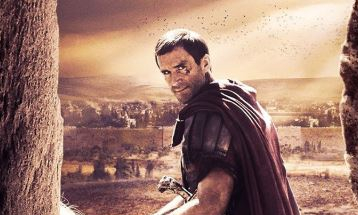
At the end of Act I in the 2016 film, Risen, a cynical Pilate probes his Tribune, Clavius, “Your ambition is noticed. Where do you hope it will lead?”

“Rome. Position. Power,” says Clavius.

“Which brings?”

“Wealth, a good family, someday a place in the country.”

“Where you will find?”

“An end to travail. A day without death.”

But death reigns in Risen, as an ever-present element in the Roman Tribune’s life. He is either delivering it, mourning it, trying to prove it, or outrun it as the film unfolds. I think that’s what makes it my new favorite Easter movie. It does not shrink from the stark reality of death and the impossibility of escaping it.

Risen follows the tradition of The Robe and Ben Hur by inserting a fictitious historical character into the Biblical narrative as an eyewitness to events. And while it doesn’t aspire to the epic proportions of those classics, it is a good story well told.

Joseph Fiennes (Luther 2003, On Wings of Eagles 2016) turns in a phenomenal performance as Clavius, the Roman Tribune charged by Pilate (Peter Firth) with insuring that Jesus stays dead, the Sanhedrin remains mollified, the mob remains pacified. And Caesar stays in the dark about all of it. The cinematography is excellent. The plot is believable, the film is well-paced, and even though special effects got the shallow end of the budget pool, the script and the acting more than made up for it. Pilate’s cynicism is palpable, but not overdone, as he and Clavius play a high-stakes game of political chess with the equally cynical High Priest. We come away reminded of how quickly truth goes by the boards as the players manipulate the message in a never-ending battle to shape public opinion.

Risen does have several historical flaws and anachronisms. Except for the High Priest once a year during the Yom Kippur ceremony in the temple, Jews would never speak the name, Yahweh. Mary Magdalene appears as a redeemed prostitute, another commonly made historical error. And those concerned with fidelity to the biblical text will note a glaring omission in the words of Jesus just before the ascension. But these are minor problems, offset by biblical faithfulness throughout the rest of the script and an excellent supporting cast. Watch especially for the drunken guard’s testimony in the bar.

Far more important, however, and ultimately more moving than any of these things is Fiennes’ Clavius. He is utterly convincing as a man’s man intimately acquainted with the brutal parts of life on a fallen planet. The moment he catches the disciples in the upper room is worth the price of the film. It’s the most compelling portrayal of a cynical man’s encounter with the risen Christ I’ve ever seen. And everyone who watches will struggle with him to reconcile two irreconcilable things: “A man dead without question, and that same man alive again.”

Rx For Anxiety

Rx For Anxiety

ANXIETY, I am not immune to it. I doubt you are either, especially now in coronavirus times. Yet something Jesus said just before his crucifixion reminds me that we have a choice about our anxieties.

The Apostle John described the scene for us in chapters thirteen and fourteen of his gospel. Jesus, already in Jerusalem for the Passover feast, was in the upper room with his closest followers, his twelve, hand-picked men. There was a price on his head. He washed their feet, shared the bread and the cup, and, most notably, predicts his betrayal. All were aghast. All were frightened. They were well aware of the threat they were under, the risks they were running by being in Jerusalem. Their anxiety was intense.

Into this fractious moment, Jesus spoke some of his most familiar words, “Do not let your hearts be troubled. Trust in God; trust also in me.” (John 14:1). Then he repeated them near the end of his talk, just before they left the upper room, saying, “Do not let your hearts be troubled and do not be afraid.” (John 14:27).

The first three words of each line tell us something about ourselves that can be hard to believe: We have a choice about our anxieties. Jesus’ two “Do not let(s)…” make an emphatic statement about our ability to choose fear or faith.

The physiological fact is that we can worry ourselves sick.

Psychiatrists have reliable evidence that the more we worry, the more we fixate on some fearful thing over which we have no control, the more likely we are to push our brain chemistry out of balance. Once the neurotransmitters like serotonin, dopamine, nor-epinephrine and, others get off-kilter, it can be tough to return them to an even keel. In some cases, medications are necessary to help restore the balance. But for most of us, medicine is a temporary fix. If we don’t address the underlying habit of fear in the first place, the imbalance is likely to reoccur.

Jesus has a prescription for preventing such brain disorders. “Do not let” it happen. “Do not let your hearts be troubled. Trust God (instead). Trust me (instead).” Do not choose to worry, and it cannot enslave your mind. Choose to trust God, and he will set it free.

Easier said than done? Yes, certainly. But it is possible. Let me offer a couple of practical steps to help. Call it Rx for Anxiety.

First, it may be necessary to confess that we’ve allowed the source of our worry (can you say coronavirus?) to become more powerful than God, more important to our wellbeing than Christ. That’s idolatry. Only confession and repentance can defeat it. “Father, thing A or thing B is occupying front and center in my life. That’s your place. I now repent of that and confess that you are God and nothing else. I confess that I am not in control.”

Second, remembering that physical expressions of worship often help us deal with difficult emotions, take a step of faith. Take that thing over which you have no control (which includes most of life, does it not?), write it down on a piece of paper, and in the act of worship offer it up to God. Then set it on fire.

Some things are more challenging to offer up like this than others. Some may require a daily offering for a while. But make it a habit with all of your worries, and peace will become your companion.

We have a choice about what to do with our anxieties. As you think about all that Christ accomplished for us during his Passion this week, choose trust.

THIS IS OUR TIME

THIS IS OUR TIME

In J. R. R. Tolkien’s epic trilogy, The Lord of the Rings, hobbit hero Frodo Baggins carries a ring of great power and evil, a ring that he and he alone can destroy in the fires of Mount Doom. Depressed by the burden he carries and the evil times, he confides to his wizard friend, Gandalf:

Frodo: I wish the Ring had never come to me. I wish none of this had happened.

Gandalf: So do all who live to see such times, but that is not for them to decide. All we have to decide is what to do with the time that is given to us. There are other forces at work in this world, Frodo, besides the will of evil. Bilbo was meant to find the Ring. In which case, you were also meant to have it. And that is an encouraging thought.

Tolkien was a veteran of WWI that killed 20 million and wounded 21 million, as well as the 1918 Spanish Flu epidemic that killed 50 million worldwide, as well as the Great Depression, and the polio epidemic that paralyzed tens of thousands. He knew a thing or two about bad times and wove what he knew about how to endure them into his stories.

The Lord of the Rings is full of perseverance and faith against all the odds.

In August of 1940, 25-30 divisions of crack Wehrmacht infantry (over 300,000 soldiers) stood poised along the coast of France. They were waiting for Reich Marshal Herman Goering’s vaunted Luftwaffe to wipe the Royal Air Force from the sky and open the English Channel for Operation Sea Lion, the invasion of Great Britain, to launch. The Germans had a three-to-one advantage in warplanes when the Battle of Britain began that July and had subdued all Western Europe in less than a year. Everyone expected them to win. Everyone that is, except Winston Churchill and the millions of British who believed him when he said, “We shall never surrender!” Londoner’s sheltered in basements, bunkers, and the subway, as the Blitz rained bombs on their city. Nazi planes indiscriminately wrecked churches, hospitals, and businesses destroyed 60% of London’s homes, wounded 87,000, and killed 32,000 people. Victims overwhelmed the hospitals, and no one knew who would “get it” next.

But by the end of October, Hitler was withdrawing his invasion force from the French coast, and canceling Operation Sea Lion.

The story of Great Britain’s ultimate victory overflows with perseverance and faith.

I take great courage from these stories of our collective past because the ultimate source of their strength was the same hope we share in a good God. He loves us no less than our ancestors and, if we ask him, will give us the strength and bravery to “keep calm and carry on,” as Londoners’ did during the Blitz, and as all God’s people are called to do in a crisis.

“Consider it pure joy, my brothers and sisters, whenever you face trials of many kinds, because you know that the testing of your faith produces perseverance. Let perseverance finish its work so that you may be mature and complete, not lacking anything.” James 1:2-4.

Every generation faces tests. The Corona virus is our time to meet the fury of a fallen planet with faith and perseverance.

So, look out for your loved ones. Ignore the fear mongers. Follow the instructions of our healthcare professionals. Trust God. “Keep calm and carry on.”  And if you haven’t seen it yet, it’s a great time to watch The Lord of the Rings

OF PANDEMICS AND THE PEOPLE OF GOD

OF PANDEMICS AND THE PEOPLE OF GOD

We are not the first to deal with a global pandemic and if God wills, we will not be the last. The only real question is: will we face it with faith in God and sacrificial love for our fellow man, or pull a Y2K kind of American Christian panic and hunker down in fear of the world outside?

Down the centuries, Christians were known to put aside personal safety in service to others during epidemics and other kinds of disasters. Are we ready to do the same today? If so, it will look a little different than it did in the past. Today it means putting aside our preference to meet together for worship, prayer, and preaching, and practicing social distancing.

Wikipedia reports that the 1918 influenza pandemic (January 1918 – December 1920; also known as the Spanish flu) … infected 500 million people around the world,[2] or about 27% of the world population of between 1.8 and 1.9 billion. The death toll is estimated to have been anywhere from 17 million[3] to 50 million, and possibly as high as 100 million, making it one of the deadliest epidemics in human history.[4][5]

The Black Plague or Bubonic Plague of Medieval times was worse. Wikipedia reports that it was one of the most devastating pandemics in human history, resulting in the deaths of an estimated 75 to 200 million people in Eurasia, peaking in Europe from 1347 to 1351.[1][2][3] …The plague created a number of religious, social and economic upheavals, with profound effects on the course of European history.

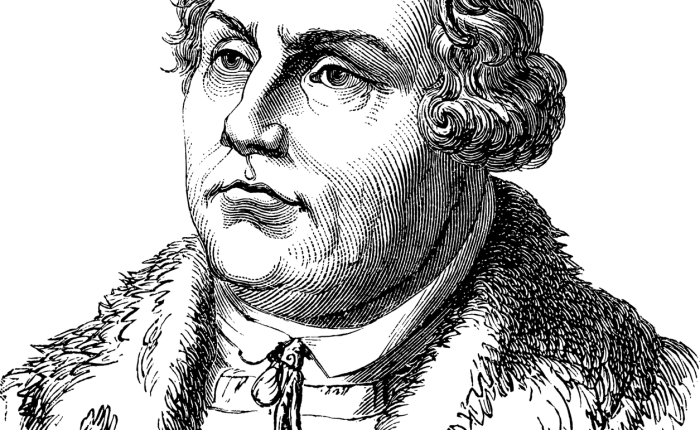
The plague was still a threat 200 years later during the Reformation, which gave Martin Luther and John Calvin, two of the greatest theological minds in history, the opportunity to comment. Both advised prudence in the face of such disasters.

John Calvin (1509 – 1564): ““For he who has set the limits to our life has at the same time entrusted to us its care; He has provided means and helps to preserve it, he has also made us able to foresee dangers; that they may not overwhelm us unaware, he has offered precautions and remedies. Now it is very clear what our debt is: Thus if the Lord had committed to us the protection of our life, our duty is to protect it; if he offers helps, to use them; if he forewarns us of dangers, not to plunge headlong; if he makes remedies available, not to neglect them…Thus “folly & prudence are instruments of the divine dispensation.” Calvin’s Institutes of the Christian Religion, Book 1, Ch. 17.

Martin Luther (1483 – 1546) “I shall ask God mercifully to protect us. Then I shall fumigate, help purify the air, administer medicine and take it. I shall avoid places and persons where my presence is not needed in order not to become contaminated and thus perchance inflict and pollute others and so cause their death as a result of my negligence. If God should wish to take me, he will surely find me and I have done what he has expected of me and so I am not responsible for either my own death or the death of others. If my neighbor needs me however I shall not avoid place or person but will go freely as stated above. See this is such a God-fearing faith because it is neither brash nor foolhardy and does not tempt God.”

Luther’s Works Volume 43 pg 132 the letter “Whether one may flee from a Deadly Plague” written to Rev. Dr. John Hess.

Churches in Washington D.C., responding to the 1918 flu pandemic, closed from October 5 through the 31st. The most Christian thing to do in the current crisis is follow their example.

CREATED EQUAL Is a Great Story

CREATED EQUAL Is a Great Story

“Eah ya got ‘nud jah?” the sweaty, African American man said as he handed back the glass Mom had given him.

“Whut,”? I asked.

“Eah ya got ‘nud jah?”

“Momma, I cain’t unnerstan this man. Whuts he wont?”

“He wants more water, honey. It’s awfully hot outside. Here, give me the glass.” She refilled it and handed it back to the man who walked into our backyard every week, dumped our garbage cans into his large metal one, slung it on his shoulder, and hauled it back to the county truck at our curb.

I was about eight years old, and the only black men I met were the ones that collected the trash or trimmed the hedge across the street from my grandma’s house. I had no idea of the life these men led or of the events swirling through our country in 1968. But the Civil Rights movement was about to make itself known in powerfully negative terms in my small southern world. By the time I reached eighth grade in DeKalb County, just outside Atlanta, racial gang fights were regular events. And dodging them was an art form for this pudgy 13-year-old.

I did not understand the roots of the anger in my black classmates. All I knew was I felt like I was paying for something I hadn’t done and over which I had no control, and I was angry. Little did I know that they felt the same way. And as a people, they’d had enough of it.

About the same time that I was waking up to racism, future Supreme Court Justice Clarence Thomas was coming to terms with his anger about the injustice. In the new documentary, Created Equal: Clarence Thomas in His Own Words, we learn how this coastal Georgia, Gullah-Geechee speaking boy, grew up from poverty to become one of the youngest men ever appointed to the bench. And how the once-radical leftist became a bastion of conservative jurisprudence.

Schooled by his grandfather’s fierce work-ethic—“Old man Can’t is dead. I helped bury him,”—and Irish Catholic nuns sympathetic to racial oppression, Thomas was bound for the priesthood. But when Martin Luther King Jr. was shot, a white seminary classmate’s comment, “I hope he’s dead,” unleashed a fury in Thomas that drove him from the ministry and into the arms of campus Marxist revolutionaries in Boston. “I’m angry with my grandfather. I’m angry with the Church. If it’s a warm day, I’m angry. If it’s a cold day, I’m angry. I’m just angry. I’m angry. I’m sort of flying, lashing out at every single thing. Nothing is right.”

But a night of violence with campus radicals shook him to his core and drove him back to the Church where he asked God, “If you take anger out of my heart, I’ll never hate again. Anger and hate,” he says, “are just other forms of slavery. Other people are controlling you.”

He would need that resolve when leftist ideologues tried to torpedo his nomination with bogus sexual assault charges during confirmation hearings. “We know exactly what’s going on here. This is the wrong black guy. He has to be destroyed,” he says in the film. Thomas’s humanity, faith, and courage are reminiscent of Jacky Robinson’s in the movie 42 as he withstands without rancor the vicious assault on his character that he termed “a high-tech lynching for uppity blacks.” Watching his story unfold helped me better understand mine and strengthened me for the cultural battles we face today.

Black history month has come and gone, and the film is no longer playing in theaters. But it will be air on PBS in May, and no doubt be available soon on DVD and streaming services. In these culturally confusing, racially tense times, it goes down like a cold drink of water on a hot summer day.

OF PANIC AND PANDEMICS

Friends,

Pandemics are unavoidable. Panic is optional. I intended to write on that topic this week, then I saw this excellent post by Stonestreet and Morris. I commend it to you.

DS

The Corona Virus, God, and a World Out of Our Control.

THE PLOW: An Ash Wednesday Reflection

THE PLOW: An Ash Wednesday Reflection

Every summer, we enjoy another of the benefits of living in a rural community: garden-fresh fruits and vegetables. I thought I knew what a fresh tomato was before I moved to the country. But then I ate an Abbott tomato. I thought I knew what sweet was, but then I tasted a Turbeville, VA cantaloupe.

One such garden was across the street from our house. But none of its fruit would’ve been possible without Mr. Rice from down the street. He didn’t water the ground. He didn’t plant the seed. He didn’t even help in the harvest. He just appeared on his tractor every spring with the thing every garden needs: the plow.

The plow is hard and sharp. It rips through weeds, punctures the hard surface, and breaks up the clotted dirt. The plow prepares the ground for the beginning of life-giving things.

The spiritual life has a parallel in the plow: repentance. Repentance penetrates hardened hearts, breaking up clods that clog our souls. Repentance opens the way for the word of God to work down into the soil of personality and bring forth the sweet fruit of a life empowered by the Spirit. Repentance is the first step in ‘putting off the old life’ and ‘putting on the new.’ Nothing happens without it.

Today is Ash Wednesday when some Christians mark their heads with an ashen cross to begin the season of Lent, a concentrated period of personal repentance before Easter. That’s good if it helps. Like an unused plow in an abandoned field, repentance has rusted away in our “self-esteem is everything” culture. But repentance is a spiritual discipline that requires regular practice if it’s to do us any good.

Nehemiah shows us how to do it.

Repentance Reviews the Offense

Repentance calls sin, sin. Nehemiah said, “I confess the sins…we have committed, including myself.” Neh.1: 6b-7.

There goes that plow blade, right into the toughest part of the ground, the hardened surface of self. We come before God and say, “Lord, I did it. It wasn’t my environment, it wasn’t my job, it wasn’t my family, I did something wrong, and I’m responsible for it.”

Repentance Is Specific

Nehemiah confessed sins of commission, doing what we know is wrong. “We have acted very wickedly toward you,” he said. We might say it this way: “God, I have been corrupt in my dealings with you. I’ve played the religious pretend game. On the outside, I look fine. On the inside, my heart is far from you.”

Corruption is a heart hardening thing. It needs a sharp plow.

Nehemiah also confessed sins of omission, failing to do what we know is right. We have not obeyed the commands… you gave to Moses.”

Finally, Nehemiah confessed to group sins. He used the plural pronoun, “We.” We don’t imagine ourselves responsible for what our culture is doing. But when we fail to speak up for the defenseless unborn, are we not responsible? When we fail to care for the poor, are we not neglecting our responsibilities?

Repentance reviews the offense and takes responsibility, putting everything out on the table between God and us. That is essential if we want a response.

It has been a long time now since we ate the fruit of the garden across the street. The neighbors who tended it died or moved away, grass and trees now fill the lot. I chatted with Mr. Rice about that. He said, “I’ve been plowing gardens for folks in town here for decades. At one time, there were thirty-five that I plowed every spring. Now there are less than five.”

When I observe our culture and see the poison it produces, I wonder if the reason is that we have stopped tending the garden of the soul, we have stopped turning over the soil of the spirit with the plow of repentance.