PLAYGROUND FAITH In a Toys R’nt Us World

PLAYGROUND FAITH  In a Toys R’nt Us World

Our church took a step of faith this month, spending about $10,000 on a new playground that should serve us for another twenty years. But the faith had nothing to do with raising money. Being a frugal bunch, we had been setting aside funds for capital improvements for years. No, the faith had to do with spending it on play-equipment in the first place. The way things are going in America, playgrounds could become a thing of the past, relics of the baby-boom gone bust.

Consider the trends: Seventy-year-old icon of childhood, Toys R Us, just closed all 800 stores, blaming the Amazon insurgency along with Wal-Mart and Target for its market decline. They were also over-leveraged, but the root of the problem is declining demand. “Most of our end-customers are newborns and children,” they said in a statement, “and, as a result, our revenue are dependent on the birthrates in countries where we operate. In recent years, many countries’ birthrates have dropped or stagnated as their population ages, and education and income levels increase.”[1]

Bottom-line, men and women aren’t getting married as often or as young as they used to. When they do they aren’t having as many babies, if they have any at all. Breakpoint’s John Stonestreet reports that the U.S. fertility rate is near 1.77 children per woman, or below the replacement rate necessary to sustain our population at current levels.[2] Children are expensive to have and costly to raise, we reason, and that’s true. But the more we treasure our treasure the less we value life.

The roots of this lie in the sexual revolution of the 1960s and the advent of “the pill,” when we divorced sex from marriage and devalued children in the process. But it has greater ramifications than the closing of a toy store chain. The supply of young workers that keep an economy growing and social programs funded declines as the population grays and demand for social services increases. Financial crises loom as this population mega-shift occurs.

But there’s more to it than that. Having children pleases God and drives spiritual growth.

From the Genesis mandate to “be fruitful and multiply,” to Jesus’s command to “let the little children come to me,” the Bible is a pro-children book. “Children are a reward from God … a crown to the aged,” wrote Solomon.[3] Ask any grandparent and you will hear “Amen!”

Raising children from diapers to diplomas is the most demanding thing anyone can do, and the most spiritually rewarding. Kids expose our selfishness and call out service: will I buy that new boat or put money aside for braces? Volunteer to coach soccer or stay in bed on Saturday mornings? Children also challenge our moral inconsistencies: “Daddy, should you really be driving that fast … on the way to church?” Most uncomfortably, children reveal our character flaws just by sharing our DNA. It’s humbling to realize that those little ones who “look just like Daddy!” also share his penchant for show-boating, self-pity, arrogance, and mendacity.

Finally—and this is only a partial list—children teach us total dependence on God. Ask any parent who has ever said, “My child will never (fill-in-the-blank),” and they will tell you that there is only one God and we aren’t him. We have no ability whatsoever to control outcomes in the lives of our little ones. God created them, gave them free will, and allows them to use it. Sooner or later—and the sooner the better—we release them to him and pray, trusting when they fall that he will raise them up, and rejoicing when they succeed.

So, building playgrounds is an act of faith. But having babies is even greater. May God bless us all with more of both.

[1] https://www.washingtonpost.com/news/wonk/wp/2018/03/15/toys-r-uss-baby-problem-is-everybodys-baby-problem/

[2] http://www.breakpoint.org/2018/04/breakpoint-toys-r-us-to-close-down/

[3] Psalm 127:3 & Proverbs 17:6
LAST WORDS OF PAUL THE APOSTLE

LAST WORDS OF PAUL THE APOSTLE

The last few years have been some of the bloodiest ever for Christians the world over. ISIS is in hiding, but their atrocities against believers remain fresh in memory. After thirty years of relative freedom, China’s new president-for-life is ramping up pressure against Churches. Iran arrests Christians and jails them without charges, North Korea routinely murders believers, and Boko Haram continues its rampages in Africa.

American believers aren’t as attuned to these realities as we should be, but the new film, Paul, Apostle of Christ, will help us connect not only with fellow believers around the world, but also with some of our own struggles with the faith.

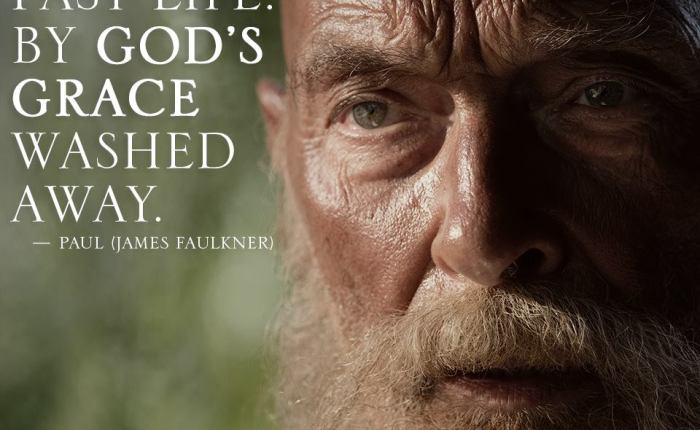
If you are accustomed to being disappointed by Bible-themed films prepare to be encouraged. Paul, starring Jim Caviezel (Luke) and James Faulkner (Paul), is an excellent film that shows the gritty reality early Christianity. Though it is not a sweeping epic on the lines of Cecil B. DeMille’s, The Ten Commandments, as Paul’s life no doubt deserves, it is a compelling story simply told.

The film alternates between two locales’, Rome’s Mamertine prison, the stinking hell-hole where Paul spent his last days, and a large villa, home of Aquilla and Priscilla and a community of refugees from Nero’s persecution. The danger to believers is punctuated by the cries of human torches, Christians the emperor scapegoated for the fire that consumed half the city, and constant fear of arrest followed by death by wild beasts in Nero’s circuses.

World Radio’s movie critic Meghan Basham found fault with the film for weaving too many themes into one script, arguing instead for a long-running TV mini-series format. She has a point. I counted fourteen possible themes that would make—in the hands of the right producers and writers—good storytelling on the small screen. And I found a few petty problems, like Mamertine prison not being as nasty as we know it was, along with some costuming issues. But, the complexity of the plot kept me engaged. And the gritty realities of persecution, suffering for Christ, loving one’s enemies, and conflicting convictions between husbands and wives as each follows Christ’s call grip the viewer.

Further, we expect great acting from Caviezel and Faulkner, and we get it, as each man struggles under intense pressure to live in love and grace. But all the acting was excellent, not always a feature of Bible-themed films.

The storytellers of a culture shape the values of a culture. Jim Caviezel understands that. In an interview some years ago he said, “I want to make films that make a difference.” Paul, Apostle of Christ is just that. It’s a great way to introduce someone who doesn’t understand the history of the faith to the founding of the Church. And seeing it in theaters is the best way to make sure more stories like this make it to the large and small screen.

SNOW SABBATH

SNOW SABBATH

The recent weather reminded me of something I wrote many years ago, when our girls were little, and a blizzard stopped the world for a while. I hope it encourages you as we anticipate more snow Saturday night.

Monday morning January 24, 2000, dawned bright and clear, but school was still out. The cold and light snow we had experienced the previous week and weekend had closed the roads and deposited several neighborhood kids on our doorstep, in our den, in the basement and in our bedrooms.  They were everywhere! Eating the groceries, needing their mittens and boots dried and going through art supplies like snow in a frying pan. A few of them (including my two youngest) were home-schooled but most attended the elementary school down the street.

When my oldest daughter asked, “Are we going to school tomorrow?” My wife and I both said, “Yes! You, your sisters, the neighbors and all the home-schooled kids in the neighborhood!”  Little did we know; the blizzard of 2000 was almost upon us.

But the storm had a different effect than might be expected. Unlike the previous week’s weather that kept only the schools closed, the blizzard brought the adult world to a standstill too.  Fifteen inches of snow in eight hours forced everyone to “be still and know that I am God”.  It created a snow sabbath.

Sabbath, at its most basic, means to cease from work. Jesus said, “The Sabbath was made for man.”  It is an opportunity for the soul to re-establish the balance and equilibrium it loses by striving in the work place. We work in a world cursed by sin and that makes work difficult and draining.  It taxes us spiritually, emotionally, and physically.  Sabbath compensates us for the energy we spend dealing with our own sins and the challenges of working life.  We need sabbath time.  It restores us.

And if you’re one of those folks that “feels guilty when I relax” then sabbath can re-orient your perspective.  I had “things to do, people to see and places to go” the next morning. But the snow sabbath forced me to realize once again that, “God can run the world quite nicely without your help thank you very much.”  That single thought, a sabbath thought, will do more to relieve your stress than anything I know.  God has worked and is working to provide for us.  He wants us to know what it means to rest in him, to be humble enough to know that we can’t accomplish anything at all without him. So, we can trust him enough to relax, let the world go by, and enjoy the peace of a quiet day, or even the occasional blizzard.

FAKE NEWS, SPIN, & HONEST JOURNALISM

FAKE NEWS, SPIN, & HONEST JOURNALISM

The Headlines Scream:

“JOY BEHAR FIRED FROM THE VIEW,” but she wasn’t.

“MICHELLE BACHMAN SAYS JESUS CREATED ASSAULT RIFLES,” but she didn’t.

And my all-time favorite: ANGRY COW KNOCKS HELICOPTER FROM SKY: Udder Destruction! Which never happened but is still hilarious.

The BBC defines fake news as:

  • Completely false information, photos or videos purposefully created and spread to confuse or misinform.
  • Information, photos or videos manipulated to deceive – or old photographs shared as new.
  • Satire or parody which means no harm but can fool people.[1]

Fake news used to be limited to the grocery store checkout line, but the web gave it legs and Twitter gave it wings. Now it’s everywhere all the time.

Fake news is easy to spot, spin not so much. Spin isn’t completely false information manipulated to deceive. It is editorial selection of facts based on undeclared presuppositions along with the imposition of a particular point of view designed to bring about specific conclusions by the viewer or reader. The same reader or viewer might arrive at different conclusions were all the facts delivered—or spun—in a different way. In other words, spin is not fair or balanced.

To spot spin we need to know some things about message crafting in general and journalism in particular.

Every reporter, indeed every message maker from the shortest Twitterer to the longest documentary film-maker makes editorial choices. The choices are limited by time and space and are guided by the story’s theme, as chosen by the writer, and the production’s priorities, specified by the editor or producer. That’s where spin begins, and all communication has some.

Every writer has a purpose which guides the selection of material including, for example the Apostle John who, as an evangelist, chose the stories most likely to convince any reader that Jesus is the Christ.

“Jesus did many other miraculous signs in the presence of his disciples,” he wrote, “which are not recorded in this book. But these are written that you may believe that Jesus is the Christ, the Son of God, and that by believing you may have life in his name.” [2]

But John and the rest of the Bible’s writers knew that God would hold them accountable to tell the truth.[3] Many publishers, producers, and editors today forget that, or never believed it in the first place. “Too much of the media acts like a special interest group,” said Michael Goodwin, chief political columnist for the New York Post. “It exists to promote its own interest and the political party with which it is aligned.”

Goodwin began his career as a clerk at the New York Times under legendary editor Abe Rosenthal whose commitment to fairness made the Times the flagship of American journalism. No more, says Goodwin. “Standards are like laws in the sense that they are designed to guide your behavior in good times and in bad. Consistent adherence to them was the source of the Times’ credibility. And eliminating them has made the paper less than ordinary. It’s only standards now are double standards.”[4]

Savvy news consumers winnow the facts from the spin and discern which facts have been deselected. Watch for concrete detail, specific examples, and definitive quotes. Ignore generalities and nonspecific adjectives or adverbs.[5]

True, total objectivity is impossible for fallen creatures. All of us are prejudiced. Ethical journalists reporting from a secular worldview usually attempt fairness by quoting person “A” on the left and person “B” on the right. But “conventional objectivity,” as Marvin Olasky, editor in chief of World News Group writes, “balances subjective views that may be ungodly.”

Biblical worldview journalism takes “the God’s-eye view”.  Its editorial priorities and conclusions are guided by Scripture. Of course, Scripture doesn’t address everything, so Olasky and company devised a six-tiered system—called rapids, after whitewater rafting’s classification system—by which they set their priorities and draw their conclusions. The lower the number the more certainty about God’s take on an issue. The higher the number—the more difficult rapid—the less likely World is to take a hard and fast stand. Either way, World reports all the facts, or at least all that they can access prior to press time, under the standard of biblical objectivity.

“The heavens declare the glory of God,” says Olasky, “but the streets declare the sinfulness of man. Biblical journalism emphasizes God’s holiness and man’s sinfulness.”[6]

When it comes to journalism, that’s the real thing.

[1]http://www.bbc.com/news/world-42487425

[2] The Holy Bible: New International Version. (1984). (Jn 20:30–31). Grand Rapids, MI: Zondervan.

[3] See: Acts 24:13; Romans 9:1; 2 Cor. 1:12; 1 Timothy 1:5; 1 John 1:3 etc.

[4] Michael Goodwin, The 2016 Election and the Demise of Journalistic Standards, Imprimis, May / June 2017.

[5] Marvin Olasky, Telling the Truth: How to Revitalize Christian Journalism, p. 33. Crossway Books, Wheaton, Illinois, 1996.

[6] World Journalism Institute’s World Policy Book & Writer’s Guide p. 7

HOW GOD HEALS BROKEN HEARTS

HOW GOD HEALS BROKEN HEARTS

Humanity is broken and hurting. Hear some comments from hurting people:

I’m 48 years old and my wife has just filed for divorce. I never planned for this. I never thought I would be alone and have to start all over this late in life. On top of that it may bankrupt me.

I was still in rehab, just recovering from a gran mall seizure brought on by spinal meningitis that could have killed me, when we learned that our daughter, contrary to everything we had taught her, had just “come out” as gay. We read the letter and sat down in front of her old bedroom door and wept broken and bitter tears.

My first husband beat me. The man I’m married to now doesn’t love me. I am fourth or fifth on his priority list. I’m so lonely and unhappy that I’m flying to the other side of the country to find a job and a new life. My life is adrift.

We only want to know one thing when we’re hurting. We aren’t interested in the weather. We don’t care about the stock market. And we sure don’t care about politics. We only want to know how to be healed.

Psalm 147, the second in a set of five that make up the last songs in the book, is a song about healing.

Verse two gives us the context saying, “He gathers the exiles of Israel.” The Psalm was written to help the people of God worship after their return from exile in Babylon. It was good to go home, but still a time of great brokenness and sadness. Their cities and towns had been destroyed, their property given to foreigners. Their spiritual, civic, and economic infrastructure was like Houston after Hurricane Harvey: a shambles.

The psalm shows us that God heals in four ways: “The Lord builds up; The Lord gathers; The Lord heals; The Lord binds up their wounds.” (V. 2-3).

First, he rebuilds what was broken down—the walls in Israel’s case. He gives them the tools and resources and leadership (under Nehemiah) to make their city secure once again, to keep out invaders, to give them stability.

God rebuilds our walls too. Brokenhearted people are often violated people. When we are sexually abused as children; when parents lose children; when we’ve invested years and fortunes in a career and suddenly lose it, our walls are broken down. We feel violated, less secure.

The healer of broken hearts helps us rebuild our walls. He brings together the tools, and the resources, and the leadership we need to make our city secure again, to give us stability in a shaky world.

Second, God gathers what was scattered. In Israel’s case it was the people, scattered about the Babylonian empire. Bit by bit and tribe by tribe, they made the pilgrimage back to the land of promise. God opened doors for them to leave. Cyrus the king issued a decree making money available. Property was returned. Travel was protected.

How does God heal us? He gathers what was scattered. Brokenhearted people are often lonely people, disconnected from healthy relationships with others. God brings us together for strength and encouragement. The New Testament is full of references to this. (See Acts 2:44-46; 2 Thessalonians 1:3).

God heals us when he gathers us to his people. When we become part of the living body of Christ, the Church, we cease to be scattered. We become connected to others who dispel our loneliness and welcome us into their lives based on our common relationship with Christ.

A challenge: do you isolate yourself? If so you are missing the healing God has for you. You may not like it at first, but it’s what you need, and God has it for you in his Church.

Third, God heals the brokenhearted with the brokenhearted. He heals the addicted with the formerly addicted; the divorced with the previously divorced; the grieving with the grieved, the hope and purpose from those who’ve come through on the other side of brokenness.

But there is a catch to all of this. Or maybe it’s better to say that the path to the healing power of God is counter-intuitive.

We are tempted in our brokenness to turn away from God, even to run. That’s the worst thing we can do. When the storm blows the hardest it is time to lean into him. The Psalmist shows us how.

Embrace humility in the pain. “Sing to him with thanksgiving,” it says (V. 4-7). Praising God when we hurt is a humbling thing, completely counter-intuitive. But that’s where the healing comes from. Lean into that wind. That’s what drives the fear and insecurity away, leaning into him with worship and praise, not running.

Finally, “put your hope in him.” (V. 8-11). Remember what Jesus said to Mary and Martha when their brother Lazarus had died? “I am the resurrection and the life. Do you believe this?” “Look to me Mary, look to me Martha. Put your hope solely in me.” It’s counter-intuitive, but it works.

Many voices vie for our attention when we are brokenhearted, many people, many philosophies promise peace and healing. Only God can give us the order we need, the comprehensive understanding that leads to healing. Only God can give us himself.

BILLY GRAHAM ON LEADERSHIP

BILLY GRAHAM ON LEADERSHIP

In the film Blackhawk Down, a vehicle filled with wounded Americans comes to a halt in the middle of a hailstorm of Somali bullets. The commanding officer orders a soldier to take the wheel. The soldier protests, “I can’t, I’m shot!”

The officer is unimpressed. “We’re all shot. Get in and drive!”

Leaders keep going, even when combat rages around us and wounds pile up within us. Those halted by trials, who give in to self-pity and retreat into apathy, vanish like sand castles with the evening tide. Those who persevere become light houses on the shores of history. Martin Luther, Charles Haddon Spurgeon, Winston Churchill, Franklin Roosevelt, Martin Luther King Jr., Chuck Colson, and of course Billy Graham, who died last week, the list of leaders who suffered huge defeats and kept going is long and no doubt one of your heroes is on it.

Harold Myra former CEO, and Marshall Shelley, former Vice President of Christianity Today International (which Graham founded), knew Billy well and worked closely with him. Their book, The Leadership Secrets of Billy Graham, records many of his trials and how Graham responded.

“I’m no different from you,” said Billy, “I would like to live a life free of problems, free of pain, and free of severe personal discipline. However, I’d had extreme pressures in my life to the point where I’ve wanted to run away from reality … I felt like going to the Cove (the retreat center he founded in North Carolina) and lying down in the cemetery to see how I fit.”

The apostle Paul also knew the wounds of leadership.

“I have been constantly on the move. I have been in danger from rivers, in danger from bandits, in danger from my own countrymen, in danger from Gentiles; in danger in the city, in danger in the country, in danger at sea; and in danger from false brothers. I have labored and toiled and have often gone without sleep; I have known hunger and thirst and have often gone without food; I have been cold and naked. Besides everything else, I face daily the pressure of my concern for all the churches.” (2 Cor 11:26-28 NIV).

Earlier in that letter Paul revealed his attitude toward suffering: “Indeed, in our hearts we felt the sentence of death. But this happened that we might not rely on ourselves but on God, who raises the dead.” (2 Cor. 1:9 NIV).

“Mountain tops are for views and inspiration,” wrote Billy, “but fruit is grown in the valleys.”

Leadership, of large organizations or small families, is exercised at a price. Plans run awry, friends fail us, the world wounds us and still the job must get done. As Churchill wrote, “Success is never final, and failure is rarely fatal. It’s the courage to continue that counts.”

That was Billy Graham. Right after the comment about getting measured for his grave he said, “God has called me to my responsibilities, and I must be faithful.”

The truth is that at some level we’re all called and we’re all shot. Lead anyway and live for the commendation that all people of God long for: “Well done good and faithful servant. You have been faithful with a few things. I will put you in charge of many things. Come and share your master’s happiness!”[1]

[1] Matthew 25:21.

COMMIT-A-PHOBIA

COMMIT-A-PHOBIA

“Look at yourself! You went to law school. You never took the bar.  You went to business college. I can’t get you near the office. You studied languages you don’t speak, instruments you don’t play. You have a series of girlfriends you never see more than twice. Do you not see a pattern here? You’re a grown man, David. Finish something!”

Linus Larrabee to his playboy brother in a scene from our favorite rom com, Sabrina. David had proposed to the latest love of his life but was having second thoughts: “I’m not ready to make this kind of commitment!”

“She’s a millionaire, David, and a doctor. She won’t be a burden!” said Linus.

No doubt, no doubt at all, we are witnessing a generation of David Larrabee’s when it comes to marriage. Fewer and fewer young men have the courage to “pop the question” and make good on lifetime commitment.

But commit-a-phobia happens in spiritual life too. Maybe the rise of the seeker movement, where everything in the church is tailored to the consumerist whims of the latest generation, has contributed or maybe it’s just a symptom. But you know it’s real when pastors say, “I’m haunted when I look into the eyes of my congregation and realize they are only two weeks away from leaving for another church.”[1]

Psalm 119 reminds us of the power and potential, the risks and rewards of commitment to God’s word and God’s way. The psalm is unique in scripture, a 176 verse Hebrew alphabetic acrostic masterpiece of devotion to the “word of God and the God of the Word”[2] that interweaves precepts with prayers, and praise with petition.

Six verses stand out against the backdrop of recent events that speak to the rewards and risks of commitment to God’s way. I’ll come to the events in a moment.

First, the commitment:

I have chosen the way of truth;

I have set my heart on your laws.

I hold fast to your statutes, O Lord;

do not let me be put to shame.[3]

Commitment is embracing with our entire being the risks and rewards of a definite path, the snot and vomit of Olympic training for the promise of the podium. It invites the order that the thing committed to imposes on life, the discipline of saying “yes” to things that align with it, and “no” to those that don’t.

Next, the risks:

Though rulers sit together and slander me,

your servant will meditate on your decrees. [4]

The arrogant mock me without restraint,

but I do not turn from your law. [5]

Remember the catty remarks emanating from media elite about Vice President Mike Pence’s faith? First, it was his commitment never to meet a woman, other than his wife, for dinner alone. The scorn at his godly stand melted away in the smutty heat of Weinstein, Lauer, and #MeToo. Next it was The View Co-host Joy Behar’s contempt at Pence’s confidence that—like followers of Christ for two millennia—he hears from God.

Indeed, the arrogant mock without restraint. That’s the risk of commitment to God.

Finally, the reward:

I run in the path of your commands,

for you have set my heart free. [6]

I will walk about in freedom,

for I have sought out your precepts.[7]

Edmund Burke said,

“Men are qualified for civil liberty in exact proportion to their disposition to put moral chains on their own appetites … It is ordained in the eternal constitution of things, that men of intemperate minds cannot be free. Their passions forge their fetters.”[8]

David Larrabee lives in all of us, but the more we indulge our commit-a-phobia the heavier we forge our chains. Commit to God’s word and God’s way and fly free.

[1] Os Guinness, The Call, Thomas Nelson, Nashville, TN, 2008. P. 71.

[2] NIV Study Bible notes.

[3] The Holy Bible: New International Version. (1984). (Ps 119:30–31). Grand Rapids, MI: Zondervan.

[4] The Holy Bible: New International Version. (1984). (Ps 119:23). Grand Rapids, MI: Zondervan.

[5] The Holy Bible: New International Version. (1984). (Ps 119:51). Grand Rapids, MI: Zondervan.

[6] The Holy Bible: New International Version. (1984). (Ps 119:32). Grand Rapids, MI: Zondervan.

[7] The Holy Bible: New International Version. (1984). (Ps 119:45). Grand Rapids, MI: Zondervan.

[8] The Works of Edmund Burke, quoted by John Stonestreet and Brett Kunkel in Practical Guide to Culture, David C. Cook, Colorado Springs, CO. p. 139.

7 KEYS TO LIFE-LONG LOVE: Valentine Advice for Women

7 KEYS TO LIFE-LONG LOVE: Valentine Advice for Women

“Dear Pastor,

Please help. My man has gone into a shell and I can’t get him out. He used to be attentive, warm, and affectionate, but now he lives in his own world.

Don’t get me wrong. I know he loves me. He works hard and pays the bills, and helps around the house, and takes the kids to soccer practice, but he’s just, I don’t know, gone somehow. He walks with God and has good friends, but he is distant from me, operating at an emotional remove; civil, but not engaging, polite, but perfunctory. I long for the connection we had in our first years together. Is he having an affair? I don’t think so, but something is wrong. What can I do?”

That lover’s lament is fictitious, but close enough to similar stories I’ve heard in counseling to make the point: long-term romantic success isn’t easy. Worse, many women have no clue about the things motivating their man’s behavior. (Hint: neither does Cosmo).

Thus, today’s Valentine advice for women: Seven ways to build long-term love.

First: Validate his need for masculine approval.

“One motive … compels men like few others,” wrote Patrick Morely, “It is foundational, perpetual, and insatiable:” A man’s need for his father’s affirmation. You might wish your approval would be enough, but it isn’t. If your man has unresolved issues with his dad that have caused pain for him, gently encourage him to seek peace and reconciliation.[1] If his father is absent, as is the case for many men, encourage him to let God be his father and let men of the church be his mentors. He will love you for it.

Second: Validate his need for accomplishment.

Every man has “an intense desire ‘to do,’ to master his world, to shape the course of events. Every man has a desire for significance, meaning and purpose; to accomplish something with his life, especially in his work. [2]” Validate that. Pray for him to find his purpose, be his greatest cheerleader in it, and celebrate each step he takes toward fulfilling it. He will thank you for it.

Third: Validate his financial pressure and don’t increase it.

The pressure to achieve a higher standard of living is relentless and stress inducing. The best thing you can do is understand the pressure he feels to provide you with the best of everything and let him know that a used car is OK, that cheap dates are just fine, and that you can wait for that expensive honeymoon until you’ve been working long enough to afford it. Do that and he will dig for ways to spend money on you.

Fourth: Be a loyal companion.

Men are notorious loners. They learn early to keep their guard up lest someone take advantage of a vulnerability. They need a partner in life that they can trust with their weaknesses as well as their strengths. That kind of trust takes time to build and is easily broken. Ridicule him or betray his vulnerabilities and you will lose him. Keep his secrets. Prove that he can trust you, that you will not take advantage of his vulnerabilities, and he will kill himself to show his appreciation.

Fifth: Speak his love language.

Most women can talk rings around most men. It’s just the way we’re wired. Unsurprisingly, many women say that their love language is words of affirmation and many men—most in my counseling experience—that theirs is physical affection. “Whatever there is of me resides in my body,” writes Gary Chapman in his bestseller, The 5 Love Languages. “To touch my body is to touch me. To withdraw from my body is to distance yourself from me emotionally.” You may have many reasons not to touch him, but he is only hearing one thing: “she doesn’t love me.” Whatever the language, learn to “fill his love tank” with it and he will reciprocate.

Sixth: Feed him.

But you knew that.

Seventh: Let him lead.

Laura Doyle, author of The Surrendered Wife, “used to think that communication was the key to a better marriage. But that wasn’t how it turned out … Even though I have a degree in communications, trying for years to “communicate” with my husband never got me the connection I craved, but the principles of surrender did. One of those principles is that a surrendered wife is trusting where she used to be controlling.”

Interestingly, Doyle didn’t plan it that way, but like many strong-willed, strong-minded women, she realized she had to make a choice to let her man be in charge. For example, men will not prioritize a task list like women or do things in the same order when they get to the task. She wants it done her way right now so, she does it now. The man thinks, “OK, I’m not needed here, won’t go there next time.” Soon, a pattern emerges and next thing you know the woman is leading and the man is disengaging from the relationship.

The need to control is generated by impatience, sometimes, and fear, but not trust. The Apostle Peter wrote: “For this is the way the holy women of the past who put their hope (or trust) in God used to make themselves beautiful. They were submissive to their own husbands, like Sarah, who obeyed Abraham and called him her master. You are her daughters if you do what is right and do not give way to fear,” (emphasis added).[3]

Ladies, don’t let the words “submissive” and “master” throw you off. In our context it means follow the leader. If you’re in a relationship with an abusive man do not submit to it and do not make excuses for him. But if you’re a woman who is destroying her romance by over controlling her relationship I encourage you to let go of your fear, trust God, and let your man lead. You will be amazed at the results.

Happy Valentines Day!

[1] Patrick Morley, What Husbands Wish Their Wives Knew About Men, p. 16 & 30.

[2] Ibid, pgs. 35 & 46.

[3] 1 Peter 3: 5-6

SEVEN KEYS TO SUCCESSFUL ROMANCE: Valentine Advice for Men

SEVEN KEYS TO SUCCESSFUL ROMANCE: Valentine Advice for Men

My senses were assaulted at Wal-Mart last night. I strolled in, minding my own business, looking for our favorite frozen desert, when the smell of flowers and candy and a huge splash of red and pink displays hit my eyeballs like a baseball bat.

“Oh, yeah! Valentines!”

Call me distracted, but don’t call me unconcerned about matters of the heart. I’ve been happily married for 34 years and doing marriage counseling for almost that long. Those displays reminded me that flowers and candy, important as they may be, are only the icing on the cake of a robust romance.

Here men, are the top seven things you need to succeed in love. Ladies, I’ll get to you next week.

ONE: An All-Out Commitment to Christ – (See Rom. 12:1-2 & John 15:1-4). All of us bring the baggage of our sinful nature into every relationship. When the flames of passion dissipate, as they always do, the baggage remains. Our lovers often want to “throw the baggage out,” so to speak, but that creates conflict. Abiding in Christ, making our lives a constant sacrifice to God and conforming our minds to his frees him to take out the trash and replace it with real love before it begins to stink up the relationship.

TWO: The Heart of a Servant-Leader – (Matthew 20:25-28). Successful lovers lead through service. Begin by leading yourself. Your lady wants to be your wife, not your Momma, your co-laborer not your wet nurse. She needs you to grow up, maximize earning potential, use money wisely, and stay out of unnecessary debt. She needs you to take care of yourself physically and emotionally, learn how to make good decisions, and be strong in the challenges of life. Not superman. Not unwilling to take advice and counsel. Just strong, full of faith, trusting God, looking ahead, paying attention, adjusting to contingencies, pursuing a goal, refusing to wither in the face of adversity.

She also needs you to take out the trash, run the vacuum, do the dishes, change the baby and—if you can do it without poisoning her—cook from time to time. It boils down to this: study her like a good waiter watches his table and provide for her needs. You will be amazed at what this will do for your love life.

THREE: Commit to Communicate – Men who succeed in love don’t hide behind the strong-silent illusion of manhood. Learn to say what you need and ask for what you want. Make sure you know your love language and how to speak hers.

FOUR: Conflict Resolution Skills – No one grows up knowing how to resolve conflicts in romance. We leave them to fester at our peril. Successful lovers learn how to have a productive argument, and then have one. They learn how to say they’re sorry, and mean it. They even learn to say that they were wrong, sometimes ;-). After that, they celebrate with ice cream. Good conflict strengthens love. Poorly managed conflict leaves deep wounds.

FIVE: Commit to Commitment – Hollywood will tell you otherwise, but all loves ebb and flow, wax and wane. Remember this: it’s the promise that keeps the love, not the love that keeps the promise.

SIX: Practice the Art of Forgiveness – The Apostle Paul told the Corinthians that “love keeps no record of wrongs.” Romantic relationships are fragile flowers. They cannot bear the chill of resentment. They wither under a grudge. Forgiveness lets the sun in and keeps the life-giving water flowing.

SEVEN: Work at it Like a Gardner – Loving a woman is like keeping a garden, not like fixing a car. A car needs a timing belt once every 100,000 miles. Romance needs daily attention like a garden needs a gardener. Every day he’s there, feeding it with the sunshine of his affection, pulling the weeds of conflict, watering it with encouragement, and fertilizing it with affirmation. And every now and then, maybe when Wal-Mart reminds him, he feeds it the Miracle Grow of flowers and chocolate. A man like that will enjoy a fruitful garden of love. The guys who don’t get weeds.

Succeeding at love is not brain surgery men, but it does take humility, commitment and work. Trust God, practice these habits and you will succeed.

BIBLICAL THINKING ABOUT IMMIGRATION

Sofia[1] smiled as she greeted me and asked for the birthday that pharmacies use as identifiers. Then she frowned and said, “I don’t see that one yet,” in gently accented English, “but I will check.” Coming back to the counter she smiled again, “They are filling it now. I’ll just put your other items to the side and take care of these customers, then call you when its ready?”

“Yes, that’s fine,” I said and stepped back to watch her work. We’ve known her since she arrived as a fourth-grade student in my wife’s art class, unable to speak a word of English. My oldest daughter, home from college at the time, became one of Sofia’s first friends by using her rudimentary Spanish to help the young immigrant understand assignments. Later, she gave her life to Christ through the ministry of Young Life, which our church supports.

The pharmacy was busy, but Sofia—now a junior college student and pharmacy tech—gave each customer the same cheerful smile and professional service. It never occurred to me to ask how she got here. I was just happy to see her doing so well, enjoying her work, and learning the business from the bottom up as she pursues her dream of becoming a doctor.

That happy story can be repeated millions of times all over America, as can the unhappy ones, like the increased drug trade, murders, welfare abuse, and human trafficking stories associated with illegal immigration. President Trump was elected in large part because he—famously or infamously, depending on your point of view—promised to bring illegal immigration to a screeching halt by building a wall and “making Mexico pay for it.”

Thinking Biblically about immigration means more than taking sides based on the latest heart-warming or inflammatory headline. It requires sorting through the balance between justice and compassion.

Scripture commands compassion for the stranger, as in Exodus 22:21: “You shall not wrong a stranger or oppress him, for you were strangers in the land of Egypt.”[2] Mary and Joseph, too, “found no room in the inn,” but did find refuge from the tyrant Herod as strangers in Egypt. Yet it also emphasizes justice: 20 “Justice, and only justice, you shall follow, that you may live and inherit the land that the Lord your God is giving you.” [3]

Empathy is easy. It comes naturally to us when we see others struggling. But empathetic compassion without justice, without something to keep it in balance, creates chaos and perverse incentives for criminal elements. Like Felix, my Uber driver earlier this month, who paid a smuggler $12,000 to get him across the Mexican border. “It’s a lot of money,” he said in a thick Cuban accent, “but safer than the Florida Straights in an overloaded boat.”  He’s working with a sponsor now to try to obtain permanent legal status, but the threat of instant deportation dogs his heels.

Barak Obama bypassed Congress when he created DACA (Delayed Action for Childhood Arrivals), a clear overreach of his executive authority. Some call it a compassionate move, but not if it creates incentives for more illegal immigration. Senator Ted Cruz, in a response to WORLD Magazine’s Evan Wilt on questions about DACA, explained: “Any action on the individuals in the DACA program could potentially lead to chain migration of 3, 4, 5 million additional people here illegally.”[4] In other words, if Congress doesn’t bring justice to bear on Mr. Obama’s attempts at compassion, more chaos will ensue.

Americans, including some Christians, have a checkered past when it comes to welcoming immigrants. Even though most of our ancestors were once émigrés dreaming the American Dream, we are no strangers to bigotry. How soon we forget.

We are also oblivious to more pragmatic considerations. Birthrates are at historic lows, which is no surprise.[5] Since Roe V. Wade, we have killed 58 million babies, each a potential taxpayer. The Social Security Administration says that the fund is healthy, and fears of its collapse are unsubstantiated, but it also says benefits may need to be reduced by 25% by 2035 and taxes increased to keep it solvent.[6]

Some complain that immigrants take American jobs, but fewer Americans are willing to do the “dirty jobs” Mike Rowe made famous. Many business owners report that it’s because of our too liberal welfare system. Why work when you can eat for free? Most immigrants—even and perhaps especially the illegals—see dirty jobs as opportunities. Those kinds of jobs have always been the first step up on the multi-generational ladder of immigrant success. And the legal immigrants who work them pay taxes.

Historically, America welcomed immigration and immigrants helped build America. Biblically, we are commanded to treat them compassionately without ignoring justice and order. Politically and economically, it seems like common sense to create a path for illegals to become legal, and to reopen the doors to immigration once the injustices created by unwise compassion have been addressed.

[1] Name changed to protect privacy.

[2] New American Standard Bible: 1995 update. (1995). (Ex 22:21). La Habra, CA: The Lockman Foundation.

[3] The Holy Bible: English Standard Version. (2016). (Dt 16:20). Wheaton, IL: Crossway Bibles.

[4] Marvin Olasky, Here to Stay? WORLD, Sept. 2017. https://world.wng.org/2017/09/here_to_stay

[5] https://www.nytimes.com/2017/07/03/health/united-states-fertility-rate.html

[6] https://www.ssa.gov/policy/docs/ssb/v70n3/v70n3p111.html