LAST WORDS OF PAUL THE APOSTLE

LAST WORDS OF PAUL THE APOSTLE

The last few years have been some of the bloodiest ever for Christians the world over. ISIS is in hiding, but their atrocities against believers remain fresh in memory. After thirty years of relative freedom, China’s new president-for-life is ramping up pressure against Churches. Iran arrests Christians and jails them without charges, North Korea routinely murders believers, and Boko Haram continues its rampages in Africa.

American believers aren’t as attuned to these realities as we should be, but the new film, Paul, Apostle of Christ, will help us connect not only with fellow believers around the world, but also with some of our own struggles with the faith.

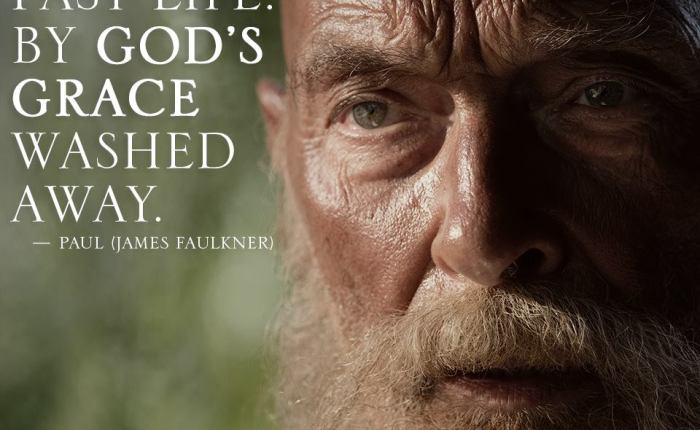
If you are accustomed to being disappointed by Bible-themed films prepare to be encouraged. Paul, starring Jim Caviezel (Luke) and James Faulkner (Paul), is an excellent film that shows the gritty reality early Christianity. Though it is not a sweeping epic on the lines of Cecil B. DeMille’s, The Ten Commandments, as Paul’s life no doubt deserves, it is a compelling story simply told.

The film alternates between two locales’, Rome’s Mamertine prison, the stinking hell-hole where Paul spent his last days, and a large villa, home of Aquilla and Priscilla and a community of refugees from Nero’s persecution. The danger to believers is punctuated by the cries of human torches, Christians the emperor scapegoated for the fire that consumed half the city, and constant fear of arrest followed by death by wild beasts in Nero’s circuses.

World Radio’s movie critic Meghan Basham found fault with the film for weaving too many themes into one script, arguing instead for a long-running TV mini-series format. She has a point. I counted fourteen possible themes that would make—in the hands of the right producers and writers—good storytelling on the small screen. And I found a few petty problems, like Mamertine prison not being as nasty as we know it was, along with some costuming issues. But, the complexity of the plot kept me engaged. And the gritty realities of persecution, suffering for Christ, loving one’s enemies, and conflicting convictions between husbands and wives as each follows Christ’s call grip the viewer.

Further, we expect great acting from Caviezel and Faulkner, and we get it, as each man struggles under intense pressure to live in love and grace. But all the acting was excellent, not always a feature of Bible-themed films.

The storytellers of a culture shape the values of a culture. Jim Caviezel understands that. In an interview some years ago he said, “I want to make films that make a difference.” Paul, Apostle of Christ is just that. It’s a great way to introduce someone who doesn’t understand the history of the faith to the founding of the Church. And seeing it in theaters is the best way to make sure more stories like this make it to the large and small screen.

SNOW SABBATH

SNOW SABBATH

The recent weather reminded me of something I wrote many years ago, when our girls were little, and a blizzard stopped the world for a while. I hope it encourages you as we anticipate more snow Saturday night.

Monday morning January 24, 2000, dawned bright and clear, but school was still out. The cold and light snow we had experienced the previous week and weekend had closed the roads and deposited several neighborhood kids on our doorstep, in our den, in the basement and in our bedrooms.  They were everywhere! Eating the groceries, needing their mittens and boots dried and going through art supplies like snow in a frying pan. A few of them (including my two youngest) were home-schooled but most attended the elementary school down the street.

When my oldest daughter asked, “Are we going to school tomorrow?” My wife and I both said, “Yes! You, your sisters, the neighbors and all the home-schooled kids in the neighborhood!”  Little did we know; the blizzard of 2000 was almost upon us.

But the storm had a different effect than might be expected. Unlike the previous week’s weather that kept only the schools closed, the blizzard brought the adult world to a standstill too.  Fifteen inches of snow in eight hours forced everyone to “be still and know that I am God”.  It created a snow sabbath.

Sabbath, at its most basic, means to cease from work. Jesus said, “The Sabbath was made for man.”  It is an opportunity for the soul to re-establish the balance and equilibrium it loses by striving in the work place. We work in a world cursed by sin and that makes work difficult and draining.  It taxes us spiritually, emotionally, and physically.  Sabbath compensates us for the energy we spend dealing with our own sins and the challenges of working life.  We need sabbath time.  It restores us.

And if you’re one of those folks that “feels guilty when I relax” then sabbath can re-orient your perspective.  I had “things to do, people to see and places to go” the next morning. But the snow sabbath forced me to realize once again that, “God can run the world quite nicely without your help thank you very much.”  That single thought, a sabbath thought, will do more to relieve your stress than anything I know.  God has worked and is working to provide for us.  He wants us to know what it means to rest in him, to be humble enough to know that we can’t accomplish anything at all without him. So, we can trust him enough to relax, let the world go by, and enjoy the peace of a quiet day, or even the occasional blizzard.

HOW GOD HEALS BROKEN HEARTS

HOW GOD HEALS BROKEN HEARTS

Humanity is broken and hurting. Hear some comments from hurting people:

I’m 48 years old and my wife has just filed for divorce. I never planned for this. I never thought I would be alone and have to start all over this late in life. On top of that it may bankrupt me.

I was still in rehab, just recovering from a gran mall seizure brought on by spinal meningitis that could have killed me, when we learned that our daughter, contrary to everything we had taught her, had just “come out” as gay. We read the letter and sat down in front of her old bedroom door and wept broken and bitter tears.

My first husband beat me. The man I’m married to now doesn’t love me. I am fourth or fifth on his priority list. I’m so lonely and unhappy that I’m flying to the other side of the country to find a job and a new life. My life is adrift.

We only want to know one thing when we’re hurting. We aren’t interested in the weather. We don’t care about the stock market. And we sure don’t care about politics. We only want to know how to be healed.

Psalm 147, the second in a set of five that make up the last songs in the book, is a song about healing.

Verse two gives us the context saying, “He gathers the exiles of Israel.” The Psalm was written to help the people of God worship after their return from exile in Babylon. It was good to go home, but still a time of great brokenness and sadness. Their cities and towns had been destroyed, their property given to foreigners. Their spiritual, civic, and economic infrastructure was like Houston after Hurricane Harvey: a shambles.

The psalm shows us that God heals in four ways: “The Lord builds up; The Lord gathers; The Lord heals; The Lord binds up their wounds.” (V. 2-3).

First, he rebuilds what was broken down—the walls in Israel’s case. He gives them the tools and resources and leadership (under Nehemiah) to make their city secure once again, to keep out invaders, to give them stability.

God rebuilds our walls too. Brokenhearted people are often violated people. When we are sexually abused as children; when parents lose children; when we’ve invested years and fortunes in a career and suddenly lose it, our walls are broken down. We feel violated, less secure.

The healer of broken hearts helps us rebuild our walls. He brings together the tools, and the resources, and the leadership we need to make our city secure again, to give us stability in a shaky world.

Second, God gathers what was scattered. In Israel’s case it was the people, scattered about the Babylonian empire. Bit by bit and tribe by tribe, they made the pilgrimage back to the land of promise. God opened doors for them to leave. Cyrus the king issued a decree making money available. Property was returned. Travel was protected.

How does God heal us? He gathers what was scattered. Brokenhearted people are often lonely people, disconnected from healthy relationships with others. God brings us together for strength and encouragement. The New Testament is full of references to this. (See Acts 2:44-46; 2 Thessalonians 1:3).

God heals us when he gathers us to his people. When we become part of the living body of Christ, the Church, we cease to be scattered. We become connected to others who dispel our loneliness and welcome us into their lives based on our common relationship with Christ.

A challenge: do you isolate yourself? If so you are missing the healing God has for you. You may not like it at first, but it’s what you need, and God has it for you in his Church.

Third, God heals the brokenhearted with the brokenhearted. He heals the addicted with the formerly addicted; the divorced with the previously divorced; the grieving with the grieved, the hope and purpose from those who’ve come through on the other side of brokenness.

But there is a catch to all of this. Or maybe it’s better to say that the path to the healing power of God is counter-intuitive.

We are tempted in our brokenness to turn away from God, even to run. That’s the worst thing we can do. When the storm blows the hardest it is time to lean into him. The Psalmist shows us how.

Embrace humility in the pain. “Sing to him with thanksgiving,” it says (V. 4-7). Praising God when we hurt is a humbling thing, completely counter-intuitive. But that’s where the healing comes from. Lean into that wind. That’s what drives the fear and insecurity away, leaning into him with worship and praise, not running.

Finally, “put your hope in him.” (V. 8-11). Remember what Jesus said to Mary and Martha when their brother Lazarus had died? “I am the resurrection and the life. Do you believe this?” “Look to me Mary, look to me Martha. Put your hope solely in me.” It’s counter-intuitive, but it works.

Many voices vie for our attention when we are brokenhearted, many people, many philosophies promise peace and healing. Only God can give us the order we need, the comprehensive understanding that leads to healing. Only God can give us himself.

COMMIT-A-PHOBIA

COMMIT-A-PHOBIA

“Look at yourself! You went to law school. You never took the bar.  You went to business college. I can’t get you near the office. You studied languages you don’t speak, instruments you don’t play. You have a series of girlfriends you never see more than twice. Do you not see a pattern here? You’re a grown man, David. Finish something!”

Linus Larrabee to his playboy brother in a scene from our favorite rom com, Sabrina. David had proposed to the latest love of his life but was having second thoughts: “I’m not ready to make this kind of commitment!”

“She’s a millionaire, David, and a doctor. She won’t be a burden!” said Linus.

No doubt, no doubt at all, we are witnessing a generation of David Larrabee’s when it comes to marriage. Fewer and fewer young men have the courage to “pop the question” and make good on lifetime commitment.

But commit-a-phobia happens in spiritual life too. Maybe the rise of the seeker movement, where everything in the church is tailored to the consumerist whims of the latest generation, has contributed or maybe it’s just a symptom. But you know it’s real when pastors say, “I’m haunted when I look into the eyes of my congregation and realize they are only two weeks away from leaving for another church.”[1]

Psalm 119 reminds us of the power and potential, the risks and rewards of commitment to God’s word and God’s way. The psalm is unique in scripture, a 176 verse Hebrew alphabetic acrostic masterpiece of devotion to the “word of God and the God of the Word”[2] that interweaves precepts with prayers, and praise with petition.

Six verses stand out against the backdrop of recent events that speak to the rewards and risks of commitment to God’s way. I’ll come to the events in a moment.

First, the commitment:

I have chosen the way of truth;

I have set my heart on your laws.

I hold fast to your statutes, O Lord;

do not let me be put to shame.[3]

Commitment is embracing with our entire being the risks and rewards of a definite path, the snot and vomit of Olympic training for the promise of the podium. It invites the order that the thing committed to imposes on life, the discipline of saying “yes” to things that align with it, and “no” to those that don’t.

Next, the risks:

Though rulers sit together and slander me,

your servant will meditate on your decrees. [4]

The arrogant mock me without restraint,

but I do not turn from your law. [5]

Remember the catty remarks emanating from media elite about Vice President Mike Pence’s faith? First, it was his commitment never to meet a woman, other than his wife, for dinner alone. The scorn at his godly stand melted away in the smutty heat of Weinstein, Lauer, and #MeToo. Next it was The View Co-host Joy Behar’s contempt at Pence’s confidence that—like followers of Christ for two millennia—he hears from God.

Indeed, the arrogant mock without restraint. That’s the risk of commitment to God.

Finally, the reward:

I run in the path of your commands,

for you have set my heart free. [6]

I will walk about in freedom,

for I have sought out your precepts.[7]

Edmund Burke said,

“Men are qualified for civil liberty in exact proportion to their disposition to put moral chains on their own appetites … It is ordained in the eternal constitution of things, that men of intemperate minds cannot be free. Their passions forge their fetters.”[8]

David Larrabee lives in all of us, but the more we indulge our commit-a-phobia the heavier we forge our chains. Commit to God’s word and God’s way and fly free.

[1] Os Guinness, The Call, Thomas Nelson, Nashville, TN, 2008. P. 71.

[2] NIV Study Bible notes.

[3] The Holy Bible: New International Version. (1984). (Ps 119:30–31). Grand Rapids, MI: Zondervan.

[4] The Holy Bible: New International Version. (1984). (Ps 119:23). Grand Rapids, MI: Zondervan.

[5] The Holy Bible: New International Version. (1984). (Ps 119:51). Grand Rapids, MI: Zondervan.

[6] The Holy Bible: New International Version. (1984). (Ps 119:32). Grand Rapids, MI: Zondervan.

[7] The Holy Bible: New International Version. (1984). (Ps 119:45). Grand Rapids, MI: Zondervan.

[8] The Works of Edmund Burke, quoted by John Stonestreet and Brett Kunkel in Practical Guide to Culture, David C. Cook, Colorado Springs, CO. p. 139.

YOU ARE NOT ALONE

John Donne famously wrote,

No man is an island,
Entire of itself,
Every man is a piece of the continent,
A part of the main.

Nevertheless, everyone feels isolated, everyone feels alone now and then, perhaps especially during the holidays. It’s part of the human condition, a result of the fall. Eve caved to the serpent’s song followed closely by Adam, each seeking to be like God, only to find that they lost connection with God and each other. Loneliness began in the garden.

From that day to this every man, woman and child knows the ache of loneliness, the pain of separation from his fellows and his Creator. Loneliness assails us especially on significant anniversaries when we feel the loss of loved ones long gone. The divorced also feel the pain, with the added grief that separation was by choice rather than by chance.

It was with such melancholy mental meanderings that I turned to meditate on John 14:1-4, a passage so familiar that the words felt lukewarm on my tongue as I recited them back to God. Lukewarm that is, until I spoke verse three: “And if I go and prepare a place for you,” said Jesus to his downcast disciples, “I will come back and take you to be with me that you also may be where I am.”

… that you also may be where I am. That little phrase lit a pale flame on the horizon of my soul that grew in magnitude like the sun rising in the porch window, filling it with warmth and banishing the night.

… that you also may be where I am, is Jesus telling us that he is just as unsatisfied with the separation as we are, that he knows the ache in our hearts, and that he is doing something about it.

… that you also may be with me where I am, is Jesus telling us how much he wants to be with us, even more than we want to be with him.

…that you also may be with me where I am, is Jesus telling us that we are welcome at his table no matter how inadequate we may feel about being there. It is he who prepared the way, not us, for he was the only one who could.

…that you also may be with me where I am, is Jesus telling us that we are not alone.

I don’t know where this meditation finds you today, perhaps full of joy and good fellowship. But if you are experiencing that existential ache, if you are feeling deeply the losses of life, Jesus offers the way home.

How? Funny, that’s the same question Doubting Thomas asked, “We don’t know where you are going, so how can we know the way?”

Jesus answered, “I am the way and the truth and the life. No one comes to the Father except through me.”

REMOVING HISTORICAL GLOSS: Metaxas’ Enlightening Luther Biography

Johann Tetzel was being robbed. The Dominican friar and Grand Commissioner for indulgences in Germany was on his way from one very profitable preaching crusade to another when a German nobleman, one who had made a great point of asking whether all future sins could be forgiven if only the right indulgence was bought, cashed in on his prior purchase and relieved the preacher of his purse.

At least, that’s how the story goes.

Yesterday, October 31, 2017, was the five hundredth anniversary of the beginning of the Protestant Reformation, which, according to the 2000 edition of LOOK magazine was the second, behind the invention of the printing press which enabled it, greatest event in the last one thousand years. The story of Tetzel and the robber baron, which is probably mythical, is one of many that Eric Metaxas covers in his excellent work, MARTIN LUTHER: The Man Who Rediscovered God and Changed the World.

Although I am only halfway through the book, listening to the audible version, I am totally sold on Metaxas’s ability to make a complicated story not only accessible and informative, but entertaining.

Mailed Not Nailed

For example, everyone knows that a theologian and monk named Martin Luther began the Protestant Reformation by posting 95 theses opposing the sale of indulgences on the Castle Church doors in Wittenberg, Germany. (An indulgence supposedly draws on the merit of the good works of Christ and the saints to deliver a sinner from punishment on earth or in purgatory). But most do not know that Luther may or may not have personally nailed the document to the doors, the bulletin board of its day. It could have been a clerk that swung the hammer. What sets October 31st apart, according to Metaxas, is that is the day Luther mailed his theses to his presiding bishop, Cardinal Albert of Brandenburg, with a proposal to call a conference of theologians on the abusive sale of indulgences.

Gutenberg’s Internet

Metaxas also illuminates the fact that, in those early days of the printing press, Luther had no intention of igniting a revolution and no idea of the part he would play in it. He was simply a pastor / theologian and faithful Catholic trying to do his job and protect his parish from oppression and heresy. The 95 theses, written in Latin, would have been indecipherable to most Germans who passed the church doors. They were meant for a limited audience of theological scholars who would have had thoughtful discussions and sent their conclusions and recommendations off to higher authority for approval.

But the printing press was to the sixteenth century what the internet is today. Information transfer went from snail’s pace to light speed almost overnight. Further, with no copyright law in place, Luther could not prevent publishers from pushing his ideas far beyond the boundaries of Wittenberg and Mainz. He was soon embroiled in a battle that he had not planned and could not have anticipated. (He also never made a dime from his writings). Ultimately, Luther saw this series of unfortunate events as providential and embraced his calling as a reformer. But Metaxas removes the gloss of history and helps us see that Luther, like many of us, was a man of his times driven as much by circumstance as by conviction to take up the work which God had prepared in advance for him to do.

I’ve only brushed the surface of Metaxas’s latest, but I hope you will read it. It will give any Christian a greater comprehension of the treasures of grace we possess, the place in history we occupy, and perhaps help us see our calling as well as Luther saw his.

KEEPING A CHILDLIKE SPIRIT

Like children the world over they chased each other around the building after the adults had finished their serious church stuff, squealing with delight. “Easy, now,” I said, trying not to raise my voice or come across too strong. “You guys slow it down a bit, use your inside voices.” I flashed back to the tiled floors and wooden pews of my childhood church, remembering the lightness of spirit, the careless joy of pursuit and escape in a building that felt like home. (The tile was great for sliding under those pews)! That’s what church should feel like for children and I didn’t want to spoil it by being a grumpy old man.

Where does that lightness go? Is it inevitable that our spirits will sag with our waistlines? Must we grow heavy with age?

No. Just as exercise and a good diet can help us stay fit, the spiritual discipline of confession keeps our spirits free of excess baggage. But also like dieting and exercise, confession has gotten a bad rap, an undeserved reputation as something only masochists enjoy, and mercy like something we must leverage from God.

Neither is true. “Confession is not primarily something God has us do because he needs it. God is not clutching tightly to his mercy, as if we have to pry it from his fingers like a child’s last cookie. We need to confess in order to heal and be changed.”[1]

What are the keys to this kind of healing? How to maintain that lightness of spirit? David gave us two clues in the fifty-first Psalm. First, he takes ownership of his sin, and second, he remembers that God is the one we most offend.[2]

I have sinned…”

Most commentators associate this confession with his adultery with Bathsheba and murder of her husband.[3] David doesn’t rationalize. He doesn’t justify himself. He doesn’t deny it or cover it up. He doesn’t say, “Joab misunderstood my orders!” Or “Bathsheba’s marriage was already over anyway. I mean, look, Uriah wouldn’t even go see her when he was in town! That proves the marriage was over!”  David owns it.  “I have done it. I’m responsible.”

The first step to being free from the soul sinking power of sin is taking responsibility for it, refusing to justify or rationalize it away. The first step is to say, “I am the man. I have sinned.”

“…against the LORD.”

The second thing David does is recognize the person whom he has most deeply offended. “I have sinned against the LORD.”

Hey, wait a minute, didn’t David sin against a whole bunch of people? Bathsheba, Uriah, his family, etc.? How is it that you are leaving them out of this confession?

Yes, he did. Yet the one who has endured the greatest insult is the giver of all good things.  When we sin, we sin against God. We sin in our bodies against the architect of anatomy. We sin in our minds against the builder of brains. We sin in our speech against the maker of mouths, the Logos, the Word of Truth. We sin in our ethics against the Spirit of righteousness. We sin in our souls against the giver of life. We sin not only against other human beings, but against what it means to be fully human – a being formed to reflect God himself. We are at odds not only with other humans, but with the meaning of humanness.

That is why if we really want to keep a childlike spirit we need to confess to the Maker of children. Then and only then can we be synchronized with the source of freedom, peace, and joy.

What is life like for us when we do that? Psalm 32, also one of David’s, explains it. The joylessness is gone, replaced by a rich appreciation of all that life is and all it has to offer. The lightness is back with gladness and expectation of more joy in the presence of God. The songs once sung in heartless ritual now resonate down in the soul. The prayers that once felt like they bounced off a brass sky now ring down the halls of heaven like the shouts of a child playing in a giant cathedral that feels like home.

[1] John Ortberg, The Life You’ve Always Wanted, P. 129

[2] See Psalm 51:3-4.

[3] See 2 Samuel 11.

ECSTASY THY NAME IS CHASTITY Seven Ways Married Sex is Best

Yes, that is a very COSMO-like headline for a preacher’s blog. But we live in the COSMO generation. We’ve bought into the idea that the best sex is low on commitment, high on recreation, and all about the right “moves.”

Guess what? The best sex isn’t about the right moves. In fact, the moves have very little to do with it. God didn’t make it that complicated. Our bodies can figure out the mechanics of sex without much help.

The best sex happens under the best conditions and it happens that way because we are so much more than bodies with sex organs. We are men and women, made in the image of God, with physical, emotional, and spiritual capacities for intimacy and ecstasy reaching far beyond anything pornography peddlers can imagine.

Thus, chastity is much more than “not doing it.” Chastity before and fidelity within marriage is the best path to ecstasy.

If you have been burned by the COSMO world, or if you are a young adult contemplating your path through our sex-is-everything culture I want to offer you a better way. In fact, I want to offer you a better world.

Married men and women have a better, more consistent sexual experience over the whole course of their lives than unmarried people. The statistics are available to anyone who wants to look, so I won’t spend any time there.[1] Instead here are seven reasons married sex is best.

First, married sex is richer because it can afford to be completely emotionally vulnerable, no fear of being left behind. The deeper the vulnerability the greater the ecstasy, but vulnerability requires levels of trust unavailable to the uncommitted.

Sex can be separated from vulnerability. People do it all the time. But they are missing at least half of the experience, probably more. Many things happen in the marriage, and in the marriage bed before and after lovemaking, that bind husband and wife together heart and soul. Unmarried sex is as risky to the heart as it is to the body, the emotional equivalent of trapeze work without a net. The marriage covenant makes both people more secure, willing to take greater emotional risks and gather its deeper sensual rewards.

Second, married sex is more generous. It is about giving pleasure as much or more than getting it. The marriage covenant fulfills our longing for existential meaning by giving our lives a higher purpose: The good of our mates and our families. Each person is already committed via a covenant spoken before God, to the death, to the other’s well being. That commitment reshapes the entire approach to lovemaking into an act of service, a free act of self-giving. Paradoxically, as Jesus taught, the more we give of ourselves the more we get in return.

Third, married sex preserves dignity. Each one honors the other and doesn’t push them to places where they don’t want to go. Married sex protects our dignity from the pornographization of everything. We treat each other as whole persons rather than objects that exist solely for individual gratification.

Fourth, married sex comes without shame before others and without guilt before God. Our cultural moment has managed to dull this sense of accountability to our creator, but it is not extinct. It is still common for unmarried people to keep the sexual nature of their relationship secret and un-celebrated. Yet celebration attends every wedding and none greater than the departure for the honeymoon where everyone in attendance knows what’s coming next.

Fifth, married sex is spiritually deeper, if the couple are believers, than even the emotional depths mentioned in number one. The Apostle Paul hinted at the spiritual dimension in Ephesians chapter five saying, “Therefore a man shall leave his father and mother and hold fast to his wife, and the two shall become one flesh.” This mystery is profound, and I am saying that it refers to Christ and the church.[2] The marriage bed foreshadows the great consummation of the ages in profoundly mysterious ways. The exquisite joy, the honor, security, and oneness we find there is merely the overture of the grand symphony we will join when he returns for his bride, the Church.

Sixth, married sex preserves the neuro-chemical high. The delicate interchange of pheromones, hormones, and neurotransmitters that fire during the act of marriage — oxytocin, nor epinephrine, serotonin, adrenaline and dopamine — along with all the neural pathways of ecstasy God designed for our good create chemical bonds between lovers broken only at great cost. That is why so many of our love songs are about the pain of loss. Multiple liaisons, no matter how greatly lauded in popular entertainment, dull those neural networks, reducing something exquisite into ordinariness and diluting the power of the chemical bond which is one of the factors driving people into stranger and kinkier attempts to reclaim the ecstasy of their first encounters.

Seventh, married sex rejoices in life. It doesn’t resent children and try to get rid of them, it celebrates children as what they really are: the incredible gift of co-creation with our loving father, the fruit of love that comes from love.

No doubt I’ve raised many questions. But this post is too long and the topic is too broad and I don’t want to linger on it, so I’ve listed resources that have been helpful to me below[3]. However, if you would like to know more I’m happy to help.

For too long preachers like me have cursed the darkness of our sexual brokenness.  We need to turn on the light. I hope this post has done that for you.

[1] http://www.nationalsexstudy.indiana.edu/; The Science of Shacking Up

Why cohabitating couples are putting their future at risk. An interview with Glenn Stanton on ‘The Ring Makes All the Difference.’

Interview by Caryn Rivadeneira. Christianity Today. 2011.

[2] The Holy Bible: English Standard Version. (2016). (Eph 5:31–32). Wheaton: Standard Bible Society.

[3] https://daneskelton.com/2017/02/08/one-ring-to-bind-them/; http://www.breakpoint.org/2016/12/progressively-regressive-sexuality-rebroadcast/; http://www.breakpoint.org/2014/12/time-new-sexual-revolution/; http://www.breakpoint.org/2013/07/recovering-sexual-wholeness/; http://www.ruthinstitute.org/; http://www.breakpoint.org/2011/11/so-long-sex-week-at-yale/; http://www.miriamgrossmanmd.com/books/; http://www.boundless.org/relationships/2007/a-review-of-unprotected-by-anonymous-md; http://www.christianitytoday.com/ct/2011/september/science-of-cohabitating.html; http://www.christianitytoday.com/ct/2009/august/16.22.html;

WAITING ON GOD AND PIZZA

I’ll never forget my boss’s reply to a demanding department head who wanted his project moved to top priority for our maintenance crew: “Your lack of planning does not constitute an emergency for me!”

I gasped and laughed out loud.  I did not think anyone, much less the head of a lowly maintenance department, could talk that way to one of the senior ministers in Atlanta’s largest megachurch and get away with it.

But he did.

I wonder if God wouldn’t say something similar to us when, in our hurry to achieve the next thing on our agenda, we run smack dab into the reality that our lack of patience does not constitute a crisis for him.

Ps. 27:14 Wait on the Lord;

Be of good courage,

And He shall strengthen your heart;

Wait, I say, on the Lord![1]

True, sometimes we use the excuse of waiting on God to cover a lack of planning or initiative. As Denzel Washington said, “Dreams without goals remain dreams, just dreams, and ultimately fuel disappointment.” But waiting on God is a pattern that runs throughout scripture.

Noah spent more than a year inside the Ark, sending out first a raven and then a dove to see if the ground was dry. Yet still he waited, even when the dove did not return, until God said, “Come out of the ark …”

Abraham waited till he and Sarah were past their normal childbearing years before God fulfilled his promise of an heir.

Joseph waited years in slavery to Potiphar the Egyptian, then two more years in prison before he was called to interpret Pharaoh’s dream and elevated to Prime Minister of the kingdom.

I doubt that Moses had this message in mind when he recorded those stories in Genesis, but for those of us in the smartphone generation, where information is instantaneously at our fingertips, it’s important to understand that life does not move on our timetable and God is never in a hurry.

The list is long and full of success for people who learned to wait on the Lord. Moses, David, Daniel, and Elijah come to mind. But waiting on him is not the same as doing nothing. It is more like waiting on the pizza delivery man by putting the plates on the table, the ice in the glasses, and the salad in the bowls and getting the dressing out of the fridge. It is a time of watchful expectancy instead of indolent passivity; patient trust and preparation instead of fussy anxiety and inconsequential busyness.

When the trust is total, the heart is quiet, and the preparation is complete, the task is entered into with confidence and the results, usually, are satisfying. Either way we are living with respect for the One who is truly in charge.

[1] The New King James Version. 1982 (Ps 27:14). Nashville: Thomas Nelson.

THE LIGHT IN THEIR EYES

It has happened too many times to be a coincidence. My wife and I will meet someone new and comment to one another later, “I think she’s a believer. I just sense that she is.” Sure enough, as we come to know the person better our intuitions are confirmed.

I call it the light in the eyes. It’s the reason we tell people about Jesus, invite them to the Alpha Course, and invite them to worship with us. That light is indicative of much deeper and greater things, things that give me deep joy.

But wait a minute; aren’t we supposed to be concerned about where people spend eternity? Heaven and hell and all that stuff? Well yes, but that comes later. Salvation, as the Bible calls it, is what happens now and continues to infinity. Life in Christ, eternal life, begins here, on earth and has definite earthly effects.

Let me outline the ones I’ve witnessed and see if you agree.

The light is the first thing and always a pleasure to see. The shadow is gone from the countenance. The expression takes on a new kind of clarity born of inner peace. The Apostle Paul called it “the peace that passes all understanding,” and he wasn’t kidding. We’ve found, sometimes after years of searching, our ultimate identity in Christ as one of God’s chosen creatures. His Spirit has taken up residence inside and filled us with … well it is not easy to explain. It just is. Love, joy and hope come close, but there is more to it than that. There is something, Someone, where before there was nothing and no one. Life will continue to have its difficulties. There will be ups and downs. But we are never again alone in the universe.

Wounds begin to be healed. Bad habits begin to be broken. Internal peace is followed, sometimes rapidly, sometimes less so depending on the level of obedience and maturity, by external peace; peace in relationships, peace in the life as it takes on more of God’s order of things. Trivialities are put aside, essentials are elevated and prioritized. Christ is at the center of the life bringing balance to the whole.

The yield of these things is fullness of life as the order and peace enable the development of capacities inborn but heretofore obscured or misdirected. The gifts of the Spirit are deployed and untapped potential is discovered.

As the believer continues to grow and these potentials come online they begin to point to purpose; the intersection of our gifteddness and passion with the needs of the church and the world. Life becomes more focused and more fruitful; confident in its identity, stabilized by the order, encouraged by capacities newly discovered resulting in the revelation of why we were put here in the first place.

Then the greatest thing of all happens. The fruit of a life formed in the image of God, filled with the Spirit of his Son begins flowing out into the blessing and encouragement of others. Others see the purpose strengthened by confidence and carried out with competence. They experience the blessing of being served by someone who seeks no personal glory. They observe the fullness of the soul and the order in the life and sense the peace that flows from inside under-girding it all.

And finally, if they are truly seeking, they too begin to see the light in the eyes and wonder where they might find it.