ABORTION SURVIVOR’S LAMENT

ABORTION SURVIVOR’S LAMENT

The details are vague now, so many decades hence. He sat on a curb or was it a granite ledge? outside the downtown clinic. Either way it was cold, barren, like his heart. The girl—yes, still a girl only 17—was inside, had disappeared into the sterile glass door of the nondescript building. She had found the place, or had he? He couldn’t remember. Either way, it hadn’t been there long, a new edition to the healthcare—cruelest euphemism—landscape. But he had found the money. Oh yes, that he clearly recalled. He found the two hundred dollars it took to end the life in her womb. In blind, self-centered cowardice he thought he was solving a problem, keeping their secret. But the cold reality of what he’d done began unconsciously seeping into his soul that day like the humid chill coming through the concrete. He paid the doctor to kill his son.

How could he have done that? How could he not see? The evil was obscured in those days. “It’s just a blob of cells,” they said. But he should have known.

Little did he know in 1977 that he was only a grain of sand in the mammoth cultural landslide that was the sexual revolution. Free love never was victimless. Roe V. Wade, that revolution’s greatest victory, remains the longest bloodbath in history with the longest trail of traumatized survivors.

Time moved on and so did he until about a decade later, when his first child was born. Something clicked, a window opened inside, and he began to see. Life is precious! He should have taken the blow, not the girl. Not the child. He should have taken the guilt and shame with her and provided for them both. That’s when he started attending the annual pro-life march downtown on January 22nd. It was the least he could do, the only thing he knew to do besides giving to crisis pregnancy centers, to publicly repent and repudiate his past. To do something about the future.

It wasn’t enough. At least, it hasn’t been so far. The Pro-Choice propaganda political action machine continues to cover the selfish cowards—yes you men, I’m talking to you not the girls, not the women; you are the ones God holds responsible to protect the defenseless and provide for your children—among us. It did so again this week when forty-four Senators refused to back the Born-Alive Abortion Survivors Protection Act, the one that requires doctors and nurses to save the life of a baby who survives an abortion.

How could they? How could they be so blind? So selfish? So cold and hard? How can the doctors and the nurses, sworn to “first do no harm” stand aside and watch them die? They can no longer hide behind youthful ignorance or scientific uncertainty. They know. They KNOW what we are doing. They know the landslide has killed millions of innocents and yet they refuse to protect and defend.

In his forties a young man walked into his life. Energetic, intelligent, eager to serve alongside and be mentored. It took a while because he was so busy with family and work, but finally it clicked. Another window opened. “The timing is about right,” he thought. “This could be my son.” A strange wave of grief and gratitude washed over him. “God you are so good to me. I don’t deserve this privilege, but I accept it as a gift from your hand.” Many more surrogate “sons” have come and gone since, and slowly the wound has healed.

“Perhaps,” he wondered, “perhaps now, with the evil so blatant that they celebrate infanticide, this new generation of brave young men and women will finally have done with the death dance. Perhaps now, if enough of us will tell the truth of what we did and what it cost and how merciful God is—perhaps now they will ignore the propaganda, listen to the still small voice of conscience, and end this revolution for good.”

TRUST GOD AND BUCKLE YOUR SEAT BELT Dealing With Life’s Disasters

TRUST GOD AND BUCKLE YOUR SEAT BELT Dealing With Life’s Disasters

Denny Hamlin’s win in the Daytona 500 was particularly poignant for Joe Gibbs Racing. The team had just buried their former president, Joe’s 49-year-old son, J. D., who died of a neurological disorder in January. I bet Joe’s family would happily forfeit the trophy and all their successes if they could have J.D. back. But that’s not how they roll.

It reminded me of other personal disasters I’ve witnessed.

Seventeen years ago, this week, I walked with my friends Phil and Shelley Ramsey, as we buried their eighteen-year-old son, Joseph, who died in a car wreck.

A late-night phone call, “Pastor, can you come? Our baby was born with undeveloped lungs and isn’t going to survive.”

A distraught counselee, “I’m thirty-nine and pregnant with our second child and my husband just left me. Where is God?”

Pregnancies that miscarry, dream jobs that become soul shredders, the number and diversity of things that can disappoint and disillusion in life is endless. But it’s worse when we think God has somehow let us down.

Evangelicals are particularly prone to this. We’re taught all our lives that God loves and cares for us: “His eye is on the sparrow,” said Jesus. “Cast your cares upon him, for he cares for you,” wrote Peter. That’s true, but not the whole story. Most of us have a truncated biblical world-view about suffering and it costs us dearly when trouble comes. We cherry-pick the verses we like and forget the context. We think life is supposed to be a Disney World ride when it’s more like the Daytona 500, where the big wreck is always in the offing.

Life’s inevitable disappointments are often about unmet expectations, of God, others, and our selves. When we line them up with what the Bible actually reveals about people, life, death, the world, and God they may not be easier to bear but they do leave us less confused and better prepared to overcome.

Scripture tells us: “time and chance happen to everyone,” including us. “His eye is on the sparrow,” but all sparrows fall. “He knows the number of the hairs on your head,” but they will turn white and turn loose. “We have this treasure in jars of clay,” that can be expected to crack without warning. All humans are “slaves of sin,” prone to follow our self-destructive passions and hurt those we’re supposed to protect. The heart is “deceitful above all things … who can really understand it?”[1]

Depressed yet? I’m not aiming for that, but it’s imperative to see that nowhere in the Bible does God promise us sunshine without sweat and smiles without sorrow. Aligning expectations with revelation dilutes frustration.

What has he promised?

To make us part of his tribe. To share with us his joy. To suffer with us when we hurt. To give us his strength. To counsel and comfort us. To love us even when we don’t love ourselves. To stand with us in life’s battles. To shape us into little Christs. To providentially provide for us and through us the things we need to survive. To empower us to participate in the awesome and terrifying task of advancing his kingdom. To give us a purpose, a future, and a hope, a reason for joy in the midst of pain. And to glorify us with Christ when he returns.[2]

Joy and sorrow will ever run parallel tracks until that day.

Joe Gibbs Racing took their fifty-four-pound trophy to Steak ‘n Shake, Sunday night, just like they did after their first win in 1993. It was the biblical thing to do.

Life is like the Daytona 500, a difficult, fascinating, disappointing, exhilarating, often dangerous, always high-stakes ride. Trust God and buckle your seat belt.

[1] See: Eccl. 9:11; Matt. 10:29-30; 2 Cor. 4:7; Rom. 6:6-22; Jer. 17:9

[2] See: Eph. 2:19; John 17:13; Matt. 28:20; Rom. 8:26; John 15:5; John 14:16; 2 Cor. 1:3-7; Rom. 8:35-39; Rom. 8:15-17; Rom. 8:29; Phil. 4:19; Acts 1:8; 1Pet. 1:3; Eph. 2:12; Rom. 8:18.

SOLOMON’S TOP FIVE ON SEX & ROMANCE

SOLOMON’S TOP FIVE ON SEX & ROMANCE

It’s February 13th and romance is in the air, or at least around the corner. Which leads me to ask this question: Do you know what the Bible teaches about romance and sex? Do your kids?

Most Evangelicals don’t and we’re suffering from it. We found out the hard way when our grown children, all three godly, intelligent young women, told us what a lousy job we did teaching them. Their verdict went something like this: “You did exactly what most Evangelical parents do with their children on this issue: freaked us out, scared us to death, and generally made us feel like sex is the last thing on earth we would ever want to have anything to do with, even in marriage. Other than that, you were great parents!”

When it came to sex, romance, and the Bible, we thought our daughters were fine. But like Mark Wahlberg said in The Italian Job, “you know what fine means? Freaked out, insecure, neurotic, and emotional.”

OK, they weren’t that bad, but it wasn’t acceptable either. That drove me to a Bible study on The Song of Songs. I benefited from Douglas Sean O’Donnell’s THE SONG OF SOLOMON: An Invitation to Intimacy, among others.  Here are my top five lessons from Solomon on love, sex, and romance.

The Bible Celebrates Our Bodies

The Bible does not separate body from soul, matter from spirit, or godly purity from physical passion. It does not devalue the human body. It exalts it. Think of the incarnation! Think of the bodily resurrection! There is no belittling of sensual delights. Jesus turned the water into vintage wine! And he did it at a wedding! There is no contradiction between spirituality and sexuality, between loving God with heart, soul, mind, and strength and loving your spouse with your body. Enjoy it. It’s a gift from God.

Words Have Erotic Power

The Song is some of the most evocative and erotic poetry ever written, but none of it is coarse or crude. The lovers teach us to praise two things: physical beauty and character, and to be specific. Fill in the blanks about your lover’s body: Your eyes are … Your lips are … Your neck is … Your voice is …. Your skin is … Your fragrance is … Fill in the blanks about your lover’s character: Your mind is … Your personality is … Your heart is … Your skills are …  The right words spark the fires of romance. The wrong ones snuff them out.

Timing is Everything

Lovers must make time for love, especially after children arrive. A man’s body works like a smoke detector: one whiff of the right perfume and he is on fire, all his bells and whistles blaring. Women’s bodies are like flowers at dawn, they wake up slowly in the sunlight of affectionate attention. Either way, wise lovers make time for love and don’t rush things.

Risk Heightens Eros

Risk plays a big role in romance. We love the risk-taking lovers: The young man who risks big bucks to follow his love to France, just to demonstrate his love; the teenager who put 500 sticky-note invitations to the prom on his girlfriend’s car; the guy who pays the skywriter big bucks to write “Will you marry me?” in the air above the football game as he kneels and holds out a ring. The extravagance and risk of failure or rejection communicates something powerful to the beloved: I WANT YOU MORE THAN MONEY, PRIDE OR SAFETY. I WOULD THROW MY LIFE AWAY TO HAVE YOU. Risk heightens Eros.

All the Roses Come with Thorns

East of Eden the “rhythm of married life is that of frustration and delight.”[1] There is a natural ebb and flow to romantic love, and the differences in our personalities and stress levels make it difficult to communicate. Be patient and forgiving with each other. The flower is no less sweet for the thorns.

As the book of Proverbs is good for all but addressed primarily to young men, so the Song of Songs is wisdom for all but addressed primarily to young women with their mothers as the primary teacher (8:2). Sing the Song for your daughters as they reach the right age and they will be far more than fine when they’re grown.

[1] David A. Hubbard, Ecclesiastes, Song of Solomon, The Communicator’s Commentary (Dallas: Word, 1991), p.313.

STRAIGHT LINES WITH CROOKED STICKS An Evangelical Response to the State of the Union Speech

STRAIGHT LINES WITH CROOKED STICKS    An Evangelical Response to the State of the Union Speech

Parents of young children need eight hands, I thought as the mom and dad juggled tiny baby, luggage, diaper bag, car-seat, boarding passes, and ID while shepherding their toddler through Phoenix Sky Harbor security. I wish they’d hurry up. Then the agent slowed things down even more by starting a conversation with the little guy.

“Is this your daddy? Uh huh. No, you don’t have to take off your shoes. Is this your mommy? Uh huh, you can hold your bear. Is that your baby sister?”

C’mon dude! Any idiot can see he’s their son! Stop harassing these people and let us in so we can all go home! If TSA agents could read minds I’d be in jail.

Then I remembered a recent news report: Human-trafficking is everywhere all the time and it is not all about sex. The Hispanic, and Romanian house-keepers in my hotels, the Moroccan Uber driver in Austin, the Russian donut shop clerk in Williamsburg, the Asian and Latino cooks who work seven-days-a-week in local restaurants. All might be in a form of slavery, working themselves to death to pay off enormous immigration debt to ruthless traffickers. Some surely are.[1]

Then there are the so-called “sex-workers”: Children, even infants, stolen, smuggled, sold into the sex trade to grow up—if they live that long—with no identity, no power, no voice, no skills and no hope. People who want to do immoral things often plan to do them on vacation. Susie Harville, who fights trafficking in Biloxi, Mississippi casino culture, told World Radio: “We had a person come down to the Mississippi Gulf Coast on a convention and um, while he was here he actually ordered a 12 year-old and a 16 year-old. One was a boy and one was a girl. What we found out was this Montana man was a deacon in his church, was married and had two children at home.”[2]

Twenty years after NAFTA—which George H. W. Bush negotiated and was ratified under Bill Clinton—killed our local textile economy, our still-struggling region is considering Casino gambling to create jobs. Really.[3]

My gut clinches in anger and grief at such stories. Doesn’t yours? But that’s not all. Scripture commands more than sympathy. “Welcome the stranger,” said Jesus. “Provide for the poor and the sojourner,” wrote Moses. Protect the immigrant, the fatherless, and the widow,” preached Jeremiah.[4]

All these ideas and one more simmered in my mind as I read the State of the Union Speech. (I no longer watch. The circus takes too long). God draws straight lines with crooked sticks. Trump the former casino owner advocates for a border solution that will choke entry points for traffickers. Who isn’t for that? Trump, who said “They have to go …” during the campaign argues for fair treatment of the dreamers while fixing our decades old immigration problems. Trump the thrice-married adulterer who has feasted on the fruits of the sexual revolution advocates for that revolution’s greatest victims—the unborn—because we are made “in the image of a holy God.”

Presidents “learn as they go” on the job, said the Arizona sheriff who called Trump’s campaign concrete wall idea a medieval solution to a 21st Century problem. “I support his current position.”[5]

Whether his policies indicate a shift in his personal morality—and I pray they do—is irrelevant. Franklin Roosevelt broke the law by providing covert support for Great Britain from 1936 to 1939 and died in the presence of his paramour in Georgia.[6] Serial adulterer John F. Kennedy[7] solved the Cuban missile crisis, preventing World War III. Rabid anti-communist “Tricky Dick” Nixon ended the Vietnam war and normalized relations with Red China, stifling communism and laying the foundation for global trade which brought billions of Chinese out of poverty and made Dollar General possible.

God draws straight lines with crooked sticks.

That’s why evangelicals like me voted for Donald Trump. We can walk and chew gum at the same time. We pray for his soul while we pull for his policies. If he succeeds in choking the flow of human trafficking and building a barrier wall against abortion, we will rejoice. Hillary Clinton would have done the opposite. It’s that simple.

I’ll try to remember that the next time TSA grills a toddler and Trump tries to privatize air traffic control, which I think is insane. Will you?

[1] https://worldandeverything.org/2019/01/listening-in-raleigh-sadler/

[2] https://worldandeverything.org/2019/02/protecting-children-on-the-gulf-coast-part-1/

[3] https://www.wsls.com/news/virginia/southside/a-casino-in-danville-it-could-happen

[4] Matthew 25:32-40; Leviticus 19:33-34; Jeremiah 7:5-7.

[5] https://worldandeverything.org/2019/01/washington-wednesday-border-security-2/

[6] https://en.wikipedia.org/wiki/Lucy_Mercer_Rutherfurd

[7] https://www.washingtonpost.com/blogs/reliable-source/post/jfk-intern-mimi-alford-shares-story-of-her-affair-with-kennedy-in-new-book-relevant-historian-robert-dallek-says-yes/2012/02/06/gIQAFgF1uQ_blog.html?utm_term=.d3b02518f54c

CAR BUYING AND CLIFFORD THE BIG RED DODGE

CAR BUYING AND CLIFFORD THE BIG RED DODGE

The government is back in business which means so is the IRS! Looks like you’ll have to do that tax return after all.

Tax season is also car buying season. The annual refund, the largest chunk of cash some people see during the year, is often planned for a down payment on new wheels. I was an ASE certified technician before I was ordained. I like helping people with their cars and I really hate it when unscrupulous dealers and technicians take advantage of my friends. So, here are a few tips on lowering your cost of transportation.

Spend Smart

Financial guru Larry Burkette said, “The cheapest car you will ever own is the one you’re driving right now.” I’ve seen the exception, but the exceptions prove the rule.

The costs of owning a car will continue to rise. Borrowing money to finance a new car over many years will cost much more than the average repair bills for the same car if you keep it five to ten years after it is paid off. I’ve driven Clifford the Big Red Dodge for eleven years and 100,000 miles and, even though I no longer perform all repairs myself, he pays me to drive him now.

Cash is the best way to buy. Driving isn’t free, so why kiss off all that interest on a loan? Make car payments to yourself, even after you pay off the one you’re driving now. In five years you will be able to afford a nicer used car. If you can’t pay cash, borrow smart. Home equity loans usually have better interest rates than car loans. Military and Credit Unions are also good bets. Shop the lenders and remember most used car lots that provide their own financing make more money loaning money than they do selling cars. The interest rates are exorbitant. You don’t have to pay them if you’re willing to shop.

Shop Smart

Most private sellers have migrated to Craigslist but watch for scammers there. My two favorite sites are Autolist, which has a very usable smartphone app, and Auto Trader.

Tap the net for reliability ratings. Consumer reports.org offers a one-month subscription to its auto ratings web-site. Their reliability ratings are the best and most objective in the business. Study results for engine, transmission, brakes, and air conditioning as these are the most expensive repair items. The higher the rating, the less the car will cost to own in the long run. Also, the higher the mechanical reliability, the higher mileage car you can purchase. A ten-year-old car with 110,000 miles on the clock can cost 25% less than a six-year-old car with 90,000 miles on it, and the difference in quality and reliability is negligible. Older cars are also cheaper to insure and incur lower taxes.

Look for ‘One-Owners.’ When buying from a dealer check the CARFAX and look for one owner cars with no damage history and clean titles that come from low corrosion, low flood probability parts of the country.

The best used cars come from the best owners. A guy who bought it new and had all the maintenance done as per ‘the book’ is rare, but he is the best because he can substantiate its history. Older sellers are usually better because they drive less and can afford to take care of their cars.

Talk to the owner. The seller’s character is as much a part of the deal as the new tires he just installed. Take someone along who is a good judge of character if you aren’t. You aren’t just buying a car; you’re buying a maintenance history. After I’ve picked a make and model I shop for the guy who’s been taking care of it for me for the past six or eight years.

Run Smart

Finally, have it inspected by a competent technician. Have him provide a list of potential problems and costs. If he has any serious reservations, walk away from the deal. Also, use him for regular oil changes and ask him to keep an eye on critical systems. He will save you money and increase reliability by doing required maintenance that can be budgeted and scheduled, rather than waiting for an expensive breakdown.

You can save thousands of dollars per year on the costs of driving. You don’t have to be a mechanic, and you don’t have to drive a ‘junker’ to do it. All it takes is a little homework and a little discipline and you can enjoy a great car as well as a higher standard of living.

THE SAINTS GOT ROBBED! NFL No-calls and the Judgment of God

THE SAINTS GOT ROBBED! NFL No-calls and the Judgment of God

The Saints got robbed! Or, maybe not. It depends on your point of view.

In case you don’t care about sports or have been living under a rock, the New Orleans Saints came within a few seconds of being the NFC champions last week and going to their second Super Bowl under coach Sean Payton, and quarterback Drew Brees. They were tied 20-20 on the Rams 13 yard-line, third-down and ten to go with 1:45 left on the clock and had possession of the ball. They only needed one more first down and a chip-shot field goal to run out the clock and win. Brees threw to Tommy Lee Lewis who was hit by Rams defensive back Nickell Robey Coleman and knocked out of bounds before he could touch the ball. It was obvious pass interference, but the ref made no call. The Rams kicker tied the game with a fifty-seven-yard field goal and LA won it in overtime.

The Superdome exploded in rage and the whole sports world is still talking about it. Some fans are so upset, they are suing the NFL over the call. Maybe they shouldn’t have bet so much on the game.

New Orleans Saints Tight End, Benjamin Watson, interviewed by Fox News Laura Ingraham, said, “We as athletes have a saying: It’s an imperfect game played by imperfect people and obviously, refereed by imperfect humans … When you have a non-call at a clutch time in a game like this, that’s not how any team wants to win or lose … but we understand that life goes on and life isn’t fair.”[1]

Watson, who is an evangelical Christian, nailed the biblical worldview, not only about the NFC championship, but about football in general. One of the reasons we love football so much is that it’s a microcosm of life. The referees are imperfect, the players are imperfect, and the game is imperfect. That’s what happens in a fallen world. Rules are important, especially where player safety is concerned. But the more perfect we try to make the competition with rules and video reviews the less it will look like real life—unless you like lawyers—and the less we will like it.

What Watson said about the game is also true about life. “We as a league, the NFL, try to put forth a product that is full of integrity, something that we can be proud of. But these things happen, and the sad thing is that there is no remedy.”[2]

No matter how long God allows us to live on this earth we will be imperfect players in an imperfect game being refereed by imperfect people. We try our best to represent the perfection Jesus modeled. But we will fail, life won’t be fair, and bad things will happen. The good news is that there is Someone watching who sees everything, who is completely impartial, who never blows a call, and who will render just judgment when the game of life is over. We can make peace with injustice and unfairness because we know he will make things right in the end.

13 And no creature is hidden from his sight, but all are naked and exposed to the eyes of him to whom we must give account. [3]

 17 Since you call on a Father who judges each person’s work impartially, live out your time as foreigners here in reverent fear.[4]

The even better news? Christ has taken all the penalties that we deserved with him to the Cross. We—including NFL referees—are free to pursue excellence without worrying about our mistakes, yet conscious of what our sins cost him and motivated not to repeat them. Put your faith in him.

[1] https://video.foxnews.com/v/5992638275001/#sp=show-clips

[2] ibid

[3] The Holy Bible: English Standard Version. (2016). (Heb 4:13). Wheaton, IL: Crossway Bibles.

[4] The New International Version. (2011). (1 Pe 1:17). Grand Rapids, MI: Zondervan.

REBUILDING PEARLAND: A Day in the Life of a Samaritan’s Purse Volunteer

REBUILDING PEARLAND: A Day in the Life of a Samaritan’s Purse Volunteer

$125 Billion dollars. It’s hard to wrap your head around that number, especially when the city you are in seems to be functioning normally. But that’s the what Hurricane Harvey cost Houston, Texas when it dumped sixty-plus inches of rain on the utterly flat city over four days in August of 2017. That ties it with Hurricane Katrina as the costliest tropical cyclone on record.

Houston metro has about 6.6 million residents and Harvey damaged roughly 204,000 homes, seventy-five percent of which were outside of the 100-year flood plain.[1] Most were not covered by flood insurance. Only when you drive through the neighborhoods and see some new looking houses next to obvious rebuild sites with FEMA trailers in the driveways, others with swollen siding and water stains half way up the walls, and empty lots with camper trailers, do you begin to comprehend the scope of the damage. It’s everywhere.

That’s why Samaritan’s Purse has made a two-year, twenty-five-million-dollar commitment to the Houston area: to help homeowners rebuild. Our team of thirteen joined eleven others from Idaho, Oregon, Texas, and Georgia at SP’s Pearland, Texas base. From there we split up into four teams and traveled from ten to twenty miles to help rebuild flood-damaged homes. The base can host a total of about thirty volunteers per week and SP schedules crews at least two months out. Another indicator of the size of the disaster: SP has a similar base in Rockport, Texas three hours west of Pearland.

The day begins with lights on at 6:30 AM. Pack your lunch in the kitchen between 6:45 and 7:00, followed by a big breakfast—the food was great!— and devotions at 7:30 usually led by one of the volunteers. Crew assignments are issued at 8:00 and teams work together to load up the specially equipped construction trailers with supplies. The trailers, essentially customized fifth-wheel horse haulers, were a marvel of efficiency. SP engineers designed them one winter when work was slow and each one has a slot or shelf equipped with every tool a builder would need.

By 9:00 AM crews are on site and ready—after a brief prayer—to work. Local building codes do not allow unlicensed workers to do the technical stuff like plumbing and electrical installation, but there is plenty to do. Our crews painted, installed soffit and siding, did light carpentry, and installed flooring. SP has already helped rebuild over forty homes and helped other agencies pay for over 500 in Houston. Permitting has proved difficult with the city, but they expect to be building many new homes in the future.

Crews work until 4:00 PM before beginning clean-up and loading to head back to base. Meeting the homeowners is the highlight for most of the crews. Ours had prayer with Mrs. Williams each day before leaving. Watching the smile grow on her face as fresh paint brightened up her walls and the new flooring went down was a highlight of our trip.

Then it’s back to base for showers, supper—did I mention the food was great?—and sharing time which concludes by 7:00 PM. Crews entertain themselves (ours played a lot of Rook) till quiet time at 9:00 PM and lights out at 10:00.

If you’d like to volunteer, visit https://www.samaritanspurse.org/ and click “get involved” at the top of the page.

[1] https://www.thebalance.com/hurricane-harvey-facts-damage-costs-4150087

IT WASN’T ALWAYS THIS WAY: Why We Do Disaster Relief and Other Good Things

IT WASN’T ALWAYS THIS WAY: Why We Do Disaster Relief and Other Good Things

“If it hadn’t been for the Christians—all the churches that showed up—we’d still be mucking out,” said the man, a Casino worker in Biloxi, Mississippi. This was October 2006, a little over a year after Hurricane Katrina devastated New Orleans and much of Biloxi. A crew of about ten men from our church, partnering with Samaritan’s Purse, were in Mississippi to help a family rebuild. I had taken a break to do some man-on-the street interviews with my new video camera.

“My house didn’t get destroyed like some of my neighbors,” he said, “but it was full of mud and water up to waist high. I’m not a churchgoer, but as soon as the storm stopped this group of kids from a church showed up and asked if they could help me clean it out. I was ready to start the rebuild within a week. No way it would have happened without their help.”

That, in a nutshell, is why we’re taking a team of 13 people to Pearland, Texas, next week, to partner again with Samaritan’s Purse and help another family rebuild after Hurricane Harvey. And the thing is, no one is surprised that a small church group from Virginia is traveling on its own dime to help people in Texas. Americans just assume that is what people do, but it wasn’t always this way. That ethos came from Christianity.

Followers of Christ have, since the beginning of the church, shown up to serve when the rest of the world was headed for the hills. When a pandemic broke out in ancient Rome, Christians, including key leaders, stayed to help the sick and dying. When the plague took hundreds of thousands of lives in Europe in the middle ages, Christians stayed to serve while others fled. When the tsunami destroyed Banda Aceh, Indonesia in 2004, Christian missionaries already in country rushed to help the Muslim population there. When the Ebola epidemic hit Africa, Christian missionary doctors and nurses stayed to fight it. That service ethic, based on the individual’s value as an image-bearer of the living God and Jesus’s story of the Good Samaritan, changed the world. Now, American’s just expect it.

Some people are wondering out loud these days what it would be like if we could just get rid of Christianity, or somehow limit its cultural impact. Nikolas Kristof, of the New York Times, reported in 2015 that, “In liberal circles, evangelicals constitute one of the few groups that it’s safe to mock openly.”[1]

This is especially true when Christians, who are called by God to love their neighbor as themselves and to stand for truth in all things, speak and act on their convictions regarding human sexuality, gender, marriage, abortion, and religious freedom.

But, historian and theologian Jeremiah Johnston, who along with his wife and five kids had to evacuate his home near Houston during Harvey, says, “It was the Christians, the people of faith, who immediately mobilized and invaded this city to help saying, ‘I love Jesus. I believe people are made in the image of God. We’re not going to sit here and let you suffer alone.’ I live in the most diverse county in America … but I never saw an Atheist tent anywhere, or an agnostic society tent, I never saw the ‘Free Thinkers’ helping people whose lives were destroyed. There’s a real world-view reason that is behind that.”[2]

Kristof concurs, it’s “true that there are plenty of secular doctors doing heroic work for Doctors Without Borders or Partners in Health. But I must say that a disproportionate share of the aid workers I’ve met in the wildest places over the years, long after anyone sensible had evacuated, have been evangelicals, nuns or priests.”[3]

The faith that causes Christians to serve disaster-stricken people is the same faith that causes us to provide free marriage counseling, speak up for the unborn, encourage adoption, help women with unplanned pregnancies, advocate for traditional marriage, fight porn and sex-trafficking, provide free meals, tell the truth about transgenderism, advocate for prison reform, and stand up for freedom of conscience and religion in the market place. The same Lord that calls us to serve tells us to speak truth in love to all who will hear. It’s why we do what we do

[1] nytimes.com/2015/03/29/opinion/sunday/nicholas-kristof-a-little-respect-for-dr-foster

[2] Warren Cole Smith interview of Johnston on the Listening In podcast, December 21, 2018. See also Johnston’s book, UNIMAGINABLE: What Our World Would Be Like Without Christianity.

[3] ibid

THE SHEPHERD KING

THE SHEPHERD KING

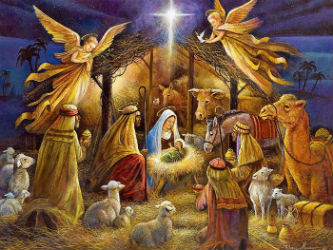
My wife, an artist, crafter, and master decorator, paints a different picture every season on the canvas that is our home. For that she draws on decades of crafts she has created and collected, all of which are important but none that rival her collection of crèches’, only thirty of which made the cut for this Christmas.

Few things say so much with so little as a manger scene, but I wonder, are we really listening? If we had to explain the scene to someone who had never heard the story, what would we tell? What is the meaning of that baby in the manger? Why is there a star on top? And what are those angels, shepherds, and wise men all about?

A phrase from Matthew’s version of the Christmas story stands out. It’s a combination of the messianic prophecy in Micah 5:2 and the fulfillment of God’s promise to provide a leader for Israel in 2 Samuel 5:2. “But you, Bethlehem, in the land of Judah, are by no means least among the rulers of Judah; for out of you will come a ruler who will be the shepherd of my people Israel.” (Matthew 2:6).

The phrase that lingers in the air, the one I think we miss at Christmas, is “ruler.” The star pointed the Magi to the one born “king of the Jews.” The shepherds went in haste to see the savior, who is “Christ the Lord.” The angels sang “glory to God in the highest …” Jesus is God, the ruler that would come. Jesus is the Shepherd King.

Kings are not the thing these days. There are only forty-three left in the world, and only eleven who have ruling authority.[1] Rulers make the rules and execute the laws of the land. They are supposed to govern, which means hold back the chaos so endemic to this fallen world. A ruler is one to whom obedience is owed. But we prefer to rule ourselves, and who can blame us? All earthly rulers suffer from the same sinful nature we inherited from Adam and we suffer with them.

But the babe in the manger is no mere earthly ruler. Jesus is the Shepherd King who lays down his life for his friends.

Let’s be real-world about this. What does that mean to a farmer who can’t get his beans out of the field because of the rain? To a sister whose brother hates and despises all she calls good? To a childless couple longing for a family? To the parents of a drug addict? To the children of an adulterer who walked out on his vows? To the man with same-sex attraction who wishes it wasn’t so? To high school teachers who get cussed every day and never see discipline applied? To a small business man working 60-70 hours a week to feed and clothe and educate a growing family? What does it mean in a world, as Jordan Peterson likes to remind us, where chaos is the norm and shalom is rare indeed?

It means many things, among them that chaos will one day come to an end and peace will reign. It means that all who have disobeyed and refused to repent will be punished and that those who have sacrificed for the King in his absence will be rewarded. It means that those who longed for the love of a family will inherit the family of God.  That now, even though we cannot see him, we have a shepherd who cares for us, a law that governs us, principles that guide us, his church to encourage us, and his Spirit to empower us through the chaos until the Kingdom comes. It means that we can afford to give ourselves away in love for others, including our enemies, as he gave himself on our behalf knowing that what we do in his name will be remembered by the King when he comes again to rule.

In the unlikely story, with all Herod’s might arrayed against him, of the birth and survival of the baby Jesus we also have the knowledge that what God purposes will get done. No matter what outward appearances indicate, as long as we are aligning ourselves with him, we will share in the glory of the King’s successes and receive his affirmation when he returns.

All hail the Shepherd King who rules and reigns on high

And grace and peace to his faithful ones until the day draws nigh

When he shall come with trumpet blast to take his earthly throne

And bless the world with righteousness when chaos is undone.

[1] https://www.washingtonpost.com/news/worldviews/wp/2013/07/22/meet-the-worlds-other-25-royal-families/?noredirect=on&utm_term=.ae8d33c41cd9

THE ELUSIVE JOY OF GIVING by Robert D. Lupton

THE ELUSIVE JOY OF GIVING by Robert D. Lupton

Note: Bob Lupton, a long-time friend of my wife’s family, founded Focused COMMUNITY Strategies over thirty years ago by moving his young family into inner-city Atlanta. He is the author of TOXIC CHARITY: How Churches and Charities Hurt Those They Help (And How to Reverse It). I thought the following, from his monthly URBAN PERSPECTIVES update, would edify you in this giving season. Reprinted by permission.

I can’t remember when Mary Phillips came to live with us. Somewhere along the journey of my father’s itinerant pastorates, Mary had attached to our family. She was like a live-in grandmother to me. I called her MeMe (a name that stuck with her the rest of her life). I remember watching out our front window for her to get off the evening bus. When I saw her coming I would run to the door to meet her, get my big hug, and wait expectantly for my “surprise.” MeMe always brought some little treat home to me. She would reach into her coat pocket and, glancing around to be sure no one else would see, slip me some little trinket or stick of gum or piece of candy, pretending that no one else in the world knew. It was our special secret.

I remember like it was yesterday (though I was only four) the day MeMe stopped giving me those daily surprises. I had run to the door to greet her as I always did, got my hug, and waited expectantly to see what she had brought for me. But for some reason on that particular day she had nothing in her pocket for me. I immediately threw a temper tantrum, creating quite an ugly, tearful scene. MeMe was obviously distressed by my behavior and vowed that she was not going to bring me any more surprises. I assumed, of course, that this was her way warning me to control such outbursts in the future. But the following day when she arrived home from work, her pockets contained no treats. The next day was the same. And the next. Her daily surprises never did resume. It wasn’t until many years later that I understood why she had so abruptly stopped her daily treats.

Seven decades later, the painful lesson I learned from MeMe’s decision remains vivid in my mind. It has sensitized me to the ways joyful giving can turn ugly when it becomes an expectation. I saw it happening in our inner-city ministry at Christmas time. We received many offers of food, clothes and toys from caring friends around the city who wanted to share their abundance. I asked Zack, an emerging young community leader, if he would assume responsibility for identifying needy neighbors and distributing the donations to them. He accepted the role with eagerness. The first year was an absolute delight as Zack delivered unexpected blessings to struggling families. He felt like Santa Claus, spreading joy and good cheer. The second year, instead of receiving joyful greetings from families, Zack felt pressure from recipients for specific gifts and special favors. His enthusiasm diminished. By year three, Zack was ready to quit. Recipients grumbled about their lack of choices, made accusations of favoritism and claimed priority rights based on their longevity in the program. What began as a joyful sharing of unexpected gifts had turned into a litany of entitlement.

MeMe and Zack figured out what it takes charities and churches much longer to learn. Giving turns toxic when the recipient comes to expect it. Gratitude turns into presumption. And the benefactor, with all good intentions, ends up creating unhealthy dependency—the very thing benevolence hopes to abate. But there is a corrective to this dilemma. Reciprocal exchange.

We discovered it when we opened the Christmas Store. When a customer and a merchant meet at the bargaining table, each brings something of value to exchange. Both stand to gain in the transaction. Parents find bargains; FCS generates needed revenue. Jobless neighbors are hired; the store gains a workforce. Both enter the exchange with worth; both exit with dignity. That’s why we named our Christmas Store promotion “Pride for Parents.”

Reciprocal exchange. It is a fundamental principle of healthy relationships. It assumes that everyone has something of value to bring to the table. The responsibility, then, of stewards of resources is to develop those systems that create the opportunity for fair and authentic exchange.