THE SHEPHERD KING

THE SHEPHERD KING

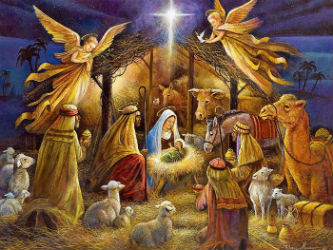
My wife, an artist, crafter, and master decorator, paints a different picture every season on the canvas that is our home. For that she draws on decades of crafts she has created and collected, all of which are important but none that rival her collection of crèches’, only thirty of which made the cut for this Christmas.

Few things say so much with so little as a manger scene, but I wonder, are we really listening? If we had to explain the scene to someone who had never heard the story, what would we tell? What is the meaning of that baby in the manger? Why is there a star on top? And what are those angels, shepherds, and wise men all about?

A phrase from Matthew’s version of the Christmas story stands out. It’s a combination of the messianic prophecy in Micah 5:2 and the fulfillment of God’s promise to provide a leader for Israel in 2 Samuel 5:2. “But you, Bethlehem, in the land of Judah, are by no means least among the rulers of Judah; for out of you will come a ruler who will be the shepherd of my people Israel.” (Matthew 2:6).

The phrase that lingers in the air, the one I think we miss at Christmas, is “ruler.” The star pointed the Magi to the one born “king of the Jews.” The shepherds went in haste to see the savior, who is “Christ the Lord.” The angels sang “glory to God in the highest …” Jesus is God, the ruler that would come. Jesus is the Shepherd King.

Kings are not the thing these days. There are only forty-three left in the world, and only eleven who have ruling authority.[1] Rulers make the rules and execute the laws of the land. They are supposed to govern, which means hold back the chaos so endemic to this fallen world. A ruler is one to whom obedience is owed. But we prefer to rule ourselves, and who can blame us? All earthly rulers suffer from the same sinful nature we inherited from Adam and we suffer with them.

But the babe in the manger is no mere earthly ruler. Jesus is the Shepherd King who lays down his life for his friends.

Let’s be real-world about this. What does that mean to a farmer who can’t get his beans out of the field because of the rain? To a sister whose brother hates and despises all she calls good? To a childless couple longing for a family? To the parents of a drug addict? To the children of an adulterer who walked out on his vows? To the man with same-sex attraction who wishes it wasn’t so? To high school teachers who get cussed every day and never see discipline applied? To a small business man working 60-70 hours a week to feed and clothe and educate a growing family? What does it mean in a world, as Jordan Peterson likes to remind us, where chaos is the norm and shalom is rare indeed?

It means many things, among them that chaos will one day come to an end and peace will reign. It means that all who have disobeyed and refused to repent will be punished and that those who have sacrificed for the King in his absence will be rewarded. It means that those who longed for the love of a family will inherit the family of God.  That now, even though we cannot see him, we have a shepherd who cares for us, a law that governs us, principles that guide us, his church to encourage us, and his Spirit to empower us through the chaos until the Kingdom comes. It means that we can afford to give ourselves away in love for others, including our enemies, as he gave himself on our behalf knowing that what we do in his name will be remembered by the King when he comes again to rule.

In the unlikely story, with all Herod’s might arrayed against him, of the birth and survival of the baby Jesus we also have the knowledge that what God purposes will get done. No matter what outward appearances indicate, as long as we are aligning ourselves with him, we will share in the glory of the King’s successes and receive his affirmation when he returns.

All hail the Shepherd King who rules and reigns on high

And grace and peace to his faithful ones until the day draws nigh

When he shall come with trumpet blast to take his earthly throne

And bless the world with righteousness when chaos is undone.

[1] https://www.washingtonpost.com/news/worldviews/wp/2013/07/22/meet-the-worlds-other-25-royal-families/?noredirect=on&utm_term=.ae8d33c41cd9

THE REASON FOR GOD’S WRATH

Wrath’s purpose in our lives, as well as the way it operates, is not what we imagine.

Someone once asked, “Do you believe people can change?”

“Yes,” I said, “I’ve seen it happen. I’ve also experienced it.”

“What makes them change?” He asked.

“The power of God working from within, but there is only one way to get that.”

“What is it?”

“Humility. Usually precipitated by pain.”

“Huh?” My friend didn’t like where this was going, but I could tell he was still interested so I pressed on.

“Most of us won’t do what the Bible calls repentance—giving up our role as Lord and Master of our lives, as well as giving up our sins, and giving ourselves over to God—until our way of doing things has caused enough pain and frustration to make us consider that God might have a better plan.”

What I didn’t tell him was that the pain that we experience is a manifestation of the mercy of God through the exercise of his wrath. It is one of his greatest, though severest, blessings.

Temporal wrath, the kind we experience during our earthly lives, as well as the way it operates, is not what we imagine.

When we think of God’s wrath we often think of cataclysmic natural phenomena: the great flood of Genesis or the Ten Plagues of Egypt. Some have even said that hurricanes and the like are evidence of God’s wrath. But a passage in Ezekiel, along with others in the New Testament, offers a different take.

Ezekiel 20:25-26 is a record of God’s wrath against Israel for her sins. It reads: “I also gave them over to statutes that were not good and laws they could not live by; I let them become defiled through their gifts—the sacrifice of every firstborn—that I might fill them with horror, so they would know that I am the LORD.”

Israel had become hard of hearing. God had sent plenty of warnings by previous prophets; notables like Elijah and Elisha and Jeremiah. But Israel had refused to listen. So God “gave them over.” In other words, he let them experience the full consequences of their choices. Instead of his civilization-building, order-preserving, life-giving Ten Commandments they ended up with a system of frustrating laws under which no one could flourish. Worse, instead of the purity and peace of temple worship they ended up sacrificing their firstborn, murdering their children to appease the new gods they had chosen over Jehovah. This was God’s merciful wrath in action: That they might be so filled with horror at their own behavior they would recognize their folly and return to him.

God’s merciful wrath is also visible in the New Testament. Jesus, responding to his disciples concern over some false teachers, said “let them alone, they are blind leaders of the blind, they will both fall into a ditch.” Paul, in Romans chapter one, repeats the phrase, “gave them over” when explaining God’s wrath. God “left them alone” so to speak. Each time the result is the same: people experiencing the painful and destructive consequences of their choices.

God’s temporal wrath works to induce revulsion in us, disgust at our own behavior, and such horror at the consequences of our choices that we are willing to consider another way to live.

Every one of us deserves God’s wrath, the eternal as well as the temporal consequences of rebellion against him. As Paul wrote to the Romans, “Are we any better? Not at all! … There is no one righteous, not even one; there is no one who understands, no one who seeks God. All have turned away. They have together become worthless; there is no one who does good, not even one.”[1]

Thankfully, eternal wrath—the eternal consequences of our rebellion against his goodness—is not the end God has for us, at least not for those who hear the message in painful consequences of ungodly choices. “But God demonstrates his own love for us in this: While we were still sinners, Christ died for us.”[2] Christ absorbed the wrath of God for us so that the only version of it we would experience is the kind that helps us change, not the eternal version.

God’s wrath in our lives is a blessing in disguise. It is designed to help us see the awfulness of sin so that we will turn to the savior.

[1] Romans 3:9-12.

[2] Romans 5:6-8.

AVOIDING WANNABE PHARISEES: Four Ways to Protect Your Freedom

“Exclusiveness and exclusion always result from making a false idol of purity. Pharisaism, in fact, is the result of a perverted passion for theological purity just as ethnic cleansing is for racial purity.”

Os Guinness

Our separation from God makes us want to belong to something exclusive, something important, something that will give us a sense of belonging and significance. Examples abound. Until his 2017 retirement, NASCAR fans were either part of Junior Nation, or they weren’t. Duke basketball fans are willing to endure the scorn of all NCAA fandom to identify with Coach K’s success. Harley Davidson is so popular that, not only do they earn hundreds of millions on non-motorcycle merchandise, people tattoo the company logo on their bodies.

Our desire to belong is matched only by our penchant to exclude. Every clique—from the silly to the deadly serious—has those who are in and those who are out. Airlines have first class, business class, and the unwashed masses class. Colleges have fraternities, sororities, and nobodies. The media-elite have the Trumpsters, the Nazis had the Jews and the Shia Muslims have the Sunni. Clearly, we love to exclude one another as much as we long to belong.

Sadly, the church is not immune. No matter how often Scripture tells us to accept, love, and serve one another, we find reasons to belittle, berate, and exclude each other. And it isn’t a new phenomenon. Moses had confrontations with Korah and his band[1], Jesus had the Pharisees, and Paul the “spiritually superior” Corinthians as well as various Judaizers—legalists who wanted Gentile believers to obey Jewish customs—to deal with.

To this day and to our shame the evangelical world has various versions of wannabe Pharisees: people who insist on imposing their convictions about non-essentials on those who are walking in the freedom purchased for them by the Cross of Christ. Few things are more damaging to a Church, diverting its energies away from its mission or derailing its spirit in worship than such division.

Why do Christians find so many things over which to break fellowship? And how do we nurture unity in the face of it? How do we deal with wannabe Pharisees and avoid becoming one ourselves? I offer four principles.

First, keep a clear conscience before God. Wannabe Pharisees want to impose their conscience on your life, but that doesn’t mean we can ignore the Spirit within or the clear instructions of Scripture. Make sure you aren’t engaging in something that opposes Christ. As Paul warned the Corinthians not to “participate with demons,”[2] ask yourself, “Am I uncritically adopting and aligning myself with a worldview and values that are opposed to Christ?” If not, you are free.

Second, ask, “is it beneficial to me and everyone else?” Wannabe Pharisees find fault with all kinds of things that aren’t explicitly “Christian.” Insisting that everything we buy, eat, listen to, or read must be labeled “Christian” or it isn’t spiritual enough is not only transparently shallow it’s also completely subjective. It puts the freedom Christ died to give us into the hands of unqualified spiritual umpires.

Third, disengage with wannabe Pharisees as soon as possible. Jesus called them “blind leaders of the blind” who will end up in the ditch and told his men to “leave them alone.”[3] Paul told Titus to avoid foolish controversies and “have nothing to do” with divisive people after a second warning. Wannabe Pharisees don’t know when to quit, mistaking our kindness for consent to continue badgering us with their priorities. Withdraw from the conversation and let there be no mistake.

Finally, ask, “does exercising my freedom open doors to evangelism or close them?”[4] Jesus said the Pharisees “bind up heavy burdens and put them on men’s shoulders,” but refuse to lift a finger to help. He warned them that they, “… shut the kingdom of heaven in men’s faces,” by their hypocrisy. Wannabe Pharisees are more concerned with controlling others than helping them know peace with God and freedom in Christ. Never let someone rob you of the joy of sharing the life of Jesus with someone else.

“It is for freedom that Christ has set us free. Stand firm, then, and do not let yourselves be burdened again by a yoke of slavery.” [5]

[1] Numbers 16

[2] 1 Cor. 10:20-11:1

[3] Matt. 15:18.

[4] 1 Cor. 9:19-23

[5] Ga 5:1

FRANCIS COLLINS FINDS THE LIGHT

In him was life, and that life was the light of men.

(John 1:4 NIV)

We call Christmas the season of light in no small part because of the meaning of this verse. But what are we to make of this mysterious word? How was Jesus the light of men?

Famed geneticist Francis Collins’s journey to faith is a good example.

Collins’s credentials and accomplishments are legendary in the scientific community. He headed up the Human Genome Project before serving as the Director of the National Institutes of Health. In 2007 he wrote a New York Times best-seller, The Language of God, which weaves together the story of his work as a world-renowned scientist and his journey from atheism to faith in Christ.

As a young doctor and atheist at the University of North Carolina Medical Center, Collins cared for many desperately sick people who, in spite of their illnesses, had profound faith. He wondered, “why were these people not shaking their fists at God and demanding that (their families) stop all this talk about a loving and benevolent super power?” After all, most of them were dying from illnesses they had done nothing to deserve.

That’s when an older patient, suffering from untreatable angina, asked a question for which he was not prepared, “What do you believe?”

“I felt my face flush as I stammered out the words,” he wrote, “I’m not really sure.”

Collins was in the dark and knew it. He began to question his integrity as a scientist and realized that, rather than consider all the evidence and come to a rational conclusion on life’s greatest question, he had engaged in, “willful blindness and something that could only be properly described as arrogance … Suddenly, all my arguments seemed very thin, and I had the sensation that the ice under my feet was cracking.”[1]

After a long period of searching, which included a review of the world’s great religions, grilling a pastor with questions, and reading C.S. Lewis’s classic, Mere Christianity, the light dawned:

“On a beautiful fall day, as I was hiking in the Cascade Mountains during my first trip west of the Mississippi, the majesty and beauty of God’s creation overwhelmed my resistance. As I rounded a corner and saw a beautiful and unexpected frozen waterfall, hundreds of feet high, I knew the search was over. The next morning, I knelt in the dewy grass as the sun rose and surrendered to Jesus Christ.”[2]

Perhaps you can identify with Collins. You know something is out there, something true, and good, and powerful enough to give dying people hope and peace, but you have been avoiding it. That something is really Someone, the light of the world, Jesus Christ.

Maybe you are ready to begin your journey into the light today, or you know someone who is. If so let me recommend C.S. Lewis’s Mere Christianity, the book that helped Collins so much. Then there’s Lee Strobel’s The Case for Faith, a modern classic. And finally, if you are of a scientific bent, The Language of God is a great place to start.

[1] Francis Collins, The Language of God (Free Press, 2007), p. 20.

[2] Francis Collins, The Language of God (Free Press, 2007), p. 225

JUSTICE FOR JACK: Religious Freedom in the Furnace

JUSTICE FOR JACK:  Religious Freedom in the Furnace

While sexual assault charges dominate the headlines, destroying careers and political prospects alike, the results of an assault on every American’s freedom of conscience are being weighed in the Supreme Court of the United States.

Jack Phillips’ Colorado bakery, Masterpiece Cakeshop, is named after his favorite Bible verse, Ephesians 2:10, “We are God’s masterpiece. He has created us anew in Christ Jesus, so we can do the good things He planned for us long ago.” (NLT) Jack’s dream was to use his artistic baking skills not only to provide for his family and serve his community, but also to bring honor to God through his every day work.

Because of that conviction, Jack made it a policy not to create artisan cakes to celebrate things that ran contrary to his religiously informed conscience. All his customers were able to get custom made cakes for their celebrations with Jack’s nearby competitors, so Jack’s convictions were never a problem until two men asked for a custom-made cake for their wedding ceremony in 2012.

Jack’s legal team, Alliance Defending Freedom, explains what happened next.

“Jack offered to sell the men any pre-made cake in his shop, but kindly explained that he could not use his artistic talents to custom-design cakes for same-sex wedding ceremonies. Like millions of people across the globe and throughout history, he affirms the biblical teaching that marriage is the sacred union of a man and a woman. Designing a cake for them would force him to violate his conscience.

The men swore at Jack and stormed out. He endured weeks of threatening phone calls and emails. His family and his employees have also been abused.

But that was only the beginning. Jack received notice from the Colorado Civil Rights Commission (CCRC). He was being sued, accused of violating the state’s nondiscrimination laws.

The commission ruled against Jack, fined him, and tried to force him to violate his conscience.

“I haven’t singled out that one issue as something I won’t do,” Jack says. “I don’t make cakes for lewd bachelor parties; I don’t make cakes to celebrate divorce; I don’t make Halloween cakes, or anything involving witchcraft.”[1]

The CCRC also ordered Jack and his staff to design cakes for same-sex wedding celebrations, go through a ‘re-education’ program, implement new policies to comply with the commission’s order, and file quarterly ‘compliance’ reports for two years to show that Jack has completely eliminated his religious beliefs from his business.

In response, Jack stopped baking custom cakes, losing 40% of his business and laying off employees as a result.

Jack’s story is reminiscent of the biblical Shadrach, Meshach, and Abednego in Daniel chapter three. As Jack refuses to bow to today’s politically correct sexual orthodoxy, so those men refused to bow before a political ideology that exalted the creature above the creator. As Jack faces the loss of his livelihood and life-savings, Daniel’s friends faced the loss of their lives. As Jack stands on his biblically informed conscience before the most powerful court of our time, they stood resolute before the greatest power of theirs, saying, “O Nebuchadnezzar, we do not need to defend ourselves before you in this matter. If we are thrown into the blazing furnace, the God we serve is able to save us from it, and he will rescue us from your hand, O king. But even if he does not, we want you to know, O king, that we will not serve your gods or worship the image of gold you have set up.”[2]

Yet Jack does not stand alone; we are in the furnace with him. His fate is ours. If the Supreme Court rules against him, then religious freedom will cease to exist in the United States. Your freedom to obey your religiously informed conscience in your business, your profession, your education, your children’s education and associations, your affiliations, and yes, even your church, will be confined to the dictates of the new sexual orthodoxy. You will be forced by law not simply to tolerate, but to celebrate things that conflict with your conscience before God.

What can you do? Four very important things:

First, pray. This is first and foremost a spiritual battle.

Second, take a stand. Let it be known that you support Jack. Write if you are able, share this post or posts from the organizations listed in the notes[3], or at the very least go on social media and say, “I stand with Jack.” Supreme Court Justices are human too. They read and your voice matters.

Third, give money. Order brownies from Jack’s bakery. Send him cash. Or send money to ADFLegal.org to help them fight.

Finally, be informed and informative. Share the sermon podcast, RELIGIOUS FREEDOM IN THE FURNACE, listed here: http://www.fccsobo.org/files/fccsobo/Podcasts/September%203,%202017%20.mp3. Become knowledgeable on these subjects and learn to give a sound-bite on why the biblical worldview of human sexuality is good for everyone and why religious freedom is the fundamental freedom.

[1] Adflegal.org/jack phillips story

[2] The Holy Bible: New International Version. (1984). (Da 3:16–18). Grand Rapids, MI: Zondervan.

[3] Adflegal.org/jack phillips story

REMOVING HISTORICAL GLOSS: Metaxas’ Enlightening Luther Biography

Johann Tetzel was being robbed. The Dominican friar and Grand Commissioner for indulgences in Germany was on his way from one very profitable preaching crusade to another when a German nobleman, one who had made a great point of asking whether all future sins could be forgiven if only the right indulgence was bought, cashed in on his prior purchase and relieved the preacher of his purse.

At least, that’s how the story goes.

Yesterday, October 31, 2017, was the five hundredth anniversary of the beginning of the Protestant Reformation, which, according to the 2000 edition of LOOK magazine was the second, behind the invention of the printing press which enabled it, greatest event in the last one thousand years. The story of Tetzel and the robber baron, which is probably mythical, is one of many that Eric Metaxas covers in his excellent work, MARTIN LUTHER: The Man Who Rediscovered God and Changed the World.

Although I am only halfway through the book, listening to the audible version, I am totally sold on Metaxas’s ability to make a complicated story not only accessible and informative, but entertaining.

Mailed Not Nailed

For example, everyone knows that a theologian and monk named Martin Luther began the Protestant Reformation by posting 95 theses opposing the sale of indulgences on the Castle Church doors in Wittenberg, Germany. (An indulgence supposedly draws on the merit of the good works of Christ and the saints to deliver a sinner from punishment on earth or in purgatory). But most do not know that Luther may or may not have personally nailed the document to the doors, the bulletin board of its day. It could have been a clerk that swung the hammer. What sets October 31st apart, according to Metaxas, is that is the day Luther mailed his theses to his presiding bishop, Cardinal Albert of Brandenburg, with a proposal to call a conference of theologians on the abusive sale of indulgences.

Gutenberg’s Internet

Metaxas also illuminates the fact that, in those early days of the printing press, Luther had no intention of igniting a revolution and no idea of the part he would play in it. He was simply a pastor / theologian and faithful Catholic trying to do his job and protect his parish from oppression and heresy. The 95 theses, written in Latin, would have been indecipherable to most Germans who passed the church doors. They were meant for a limited audience of theological scholars who would have had thoughtful discussions and sent their conclusions and recommendations off to higher authority for approval.

But the printing press was to the sixteenth century what the internet is today. Information transfer went from snail’s pace to light speed almost overnight. Further, with no copyright law in place, Luther could not prevent publishers from pushing his ideas far beyond the boundaries of Wittenberg and Mainz. He was soon embroiled in a battle that he had not planned and could not have anticipated. (He also never made a dime from his writings). Ultimately, Luther saw this series of unfortunate events as providential and embraced his calling as a reformer. But Metaxas removes the gloss of history and helps us see that Luther, like many of us, was a man of his times driven as much by circumstance as by conviction to take up the work which God had prepared in advance for him to do.

I’ve only brushed the surface of Metaxas’s latest, but I hope you will read it. It will give any Christian a greater comprehension of the treasures of grace we possess, the place in history we occupy, and perhaps help us see our calling as well as Luther saw his.

PRODUCING BETTER THINKERS

The discussion had been disturbing. The young woman I was counseling was in deep-dish trouble. Her relationships were dysfunctional, she was up to her armpits in debt, and most of her decisions were based on a daily reading of her horoscope.

But the most disturbing thing was that she had grown up attending church. She was supposed to know how to manage life, but she didn’t. Her spiritual journey included a lot of lessons to help her feel good, but very few to help her be good.

That isn’t the way Church is supposed to be.

The Apostle Paul said that in the Church we are to “in all things grow up into him who is the Head, that is, Christ.” (Eph 4:15). We have the Scriptures for, as he told Timothy, “teaching, rebuking, correcting and training in righteousness, so that the man of God may be thoroughly equipped for every good work.” (2 Tim 3:16-17)

The church is supposed to be God’s university on planet earth, a learning center for Biblical life lessons, a place where each member is constantly growing up into maturity in Christ.

A healthy church is a place where the Christian’s life foundations are laid, where we learn how the Bible applies to everyday life. Healthy churches equip believers to discern between wisdom and the world’s empty values.

Consider some issues believers should be able to think through and come to soundly biblical conclusions: How best to manage our finances? How are we to think about gun violence? What is the best way to help Puerto Rico recover? Should we stay in NAFTA? How about student loan debt? How should we lower the burden on college students? How can we discern between so-called fake news and the real thing?

The list of things we need to know how to think about is endless and simple answers elude us. How should serious-minded believers respond? Can the Bible help?

The Bible doesn’t always teach us what to think. But it can teach us how to think biblically on issues from Abortion to Zoning laws. That’s what it means to develop a biblical worldview. Healthy Christians develop a biblical worldview in God’s university, the local church, becoming in the process better parents, better students, better leaders, better workers, and better citizens.

I’m so grateful for the dedicated Sunday School teachers and small group leaders our church has benefited from over the years! The list is long, but each one has helped us “grow up in all things into Christ,” to think biblically about our world.

And what about you? Do you have the ability to teach? Have you ever tried? Could you take a rotation in Children’s Church, or as a small group Bible study, or Sunday School teacher?

Just like the young woman in my office that day, the church needs good teachers on all levels now more than ever. Ask God if he is calling you to lay the foundation for someone else’s future.

A FACE LIKE FLINT: Os Guinness’s Call to Courage

8 “Behold, I have made your face as hard as their faces, and your forehead as hard as their foreheads. Like emery harder than flint have I made your forehead. Fear them not, nor be dismayed at their looks, for they are a rebellious house.”[1]

Thus spoke God to Ezekiel, his prophet to the exiled Jews in Babylon circa 593 B.C., and so speaks Os Guinness to a church increasingly exiled from American culture today in his book, IMPOSSIBLE PEOPLE: Christian Courage and the Struggle for the Soul of Civilization.

Guinness, the great-great-great grandson of Arthur Guinness, the Dublin brewer, is author of over 30 books and one of the most erudite and articulate spokesmen for the truth and goodness of the biblical world view working today. IMPOSSIBLE PEOPLE is a clarion call to the church to face up to the realities of the forces arrayed against the faith and to stand strong against “everything that contradicts the call of our Lord – whatever the cost and whatever the outcome.”

“At stake,” writes Guinness, “is the attempted completion of the centuries-long assault on the Jewish and Christian faiths and their replacement by progressive secularism as the defining faith of the West and the ideology said to be the best suited to the conditions of advanced modernity. The gathering crisis is therefore about nothing less than a struggle for the soul of the West and the place of faith – any faith – in the life of advanced modern societies.”[2]

With that introduction he proceeds through seven concise but weighty chapters to explain the philosophical, social, political and spiritual roots of the mudslide of global modernity now enveloping Western Civilization.

Guinness is not content with social criticism. He does not stop at analysis nor does he offer up practical but ultimately shallow steps at making a difference. He goes deeper by helping us think and pray about our part in the grand drama that is the Church in the world.

The book’s brevity, it is only 225 pages, and Guinness’s clarity make his analysis convincing and fascinating, but it is weighty. It is not a “how-to-do-it” book, but a “how-to-think-about-it” book. Each chapter concludes with an insightful prayer and three discussion questions designed to help the reader decide how he or she will participate in the grand struggle for the soul of civilization. If you like meat in your morning devotions you will find it here. I read it with pen in hand after my first cup of coffee and found it compelling.

The Church in what remains of Western Civilization needs more Ezekiels. Those who feel the call to fill those shoes need to read Guinness.

[1] The Holy Bible: English Standard Version. (2016). (Eze 3:8–9). Wheaton: Standard Bible Society.

[2] P. 22

STAYING PUT: Lessons from Long-Term Ministry

“Thank you,” seems inadequate for all of the honors I received from Faith Community Church  last Sunday. The church took the morning to celebrate my twentieth anniversary as its pastor, taking me by surprise in the process.

Some themes stood out in the comments, and others came to mind later, which might prove helpful to you someday. Call them Leadership Lessons from Long -Term Ministry, but many will apply even if you are not a preacher.

Preach the Word. Expository preaching, interpreting and explaining a passage of scripture in its historical, grammatical, literary, cultural, and biblical context, demonstrating how it applies to the listener and points them to Christ, is key to the vitality of any church or believer. It is a time-consuming endeavor that preachers either have to fight for against other demands, or are gifted with by a congregation. FCC made the decision long before I arrived to give its pastor, and by proxy itself, that gift. All of us benefit from it. Find a church that values this and you will usually find a healthy church.

Decide to stay. If you want to have a deep impact on a community you have to commit to the long term. Randy Pope, Eugene Peterson, Rick Warren, and many others advocated for this in their writings as I was preparing for ministry, and I believed them then. But now I’ve seen the generational effects of hoeing one row for two decades and the fruit is sweet. Warning: You cannot do long-term work without short-term rests. Build Sabbath into your lifestyle and vacations into your years.

Speak hard truth with soft words. Speak with grace and gospel faithfulness to the difficult cultural trends of the day and do not flinch. It will force you to examine yourself, be fair to others, and rely more on Christ. It will also stiffen the spines of your listeners.

Be with people one-on-one. Love them for who they are, where they are, as they are. Grieve with them, celebrate with them, honor them, and respect them. They will do the same for you.

Make sure you have a Paul, a Barnabas, and a Timothy; a mentor, a brother, and a disciple, or trainee into whom you can pour your life. They will coach you when you are clueless, strengthen you when you are weak, and challenge you to keep growing.

Believe in people and don’t micro-manage them. Find good people, give them the goal and the support they need, and then get out of their way. Look for and expect their best, and they will usually give it to you. Related: recruit people to your team who are strong where you are weak. I learned long ago that I was too emotional and empathetic for my own good. That’s one reason I try to surround myself what I call “concrete rational” personality types who can help me stay grounded in biblical objectivity.

Pray more than you politic. Consensus building and deal-making have their place in life. But no amount of politicking can accomplish what prayer can do.

Plan ahead and then give your plans to God.  Every leader needs to be at least five months, and preferably five years, ahead of his organization. But as in war, so in ministry, no plan survives combat. Keep the goal clearly in mind, pay attention to the dynamics of the situation, listen to His Spirit and be flexible with the details.

Offend early and often. I’m a recovering co-dependent people-pleaser. It took years to realize that people come into churches and other organizations with all kinds of expectations of the leadership, some conscious, some not; some reasonable, some silly, and some outrageous. Trying to keep them all happy was suicidal. I learned to make sure they knew what to expect, and what not to expect, as soon as possible. It felt offensive to my empathetic soul to do this, to disappoint some people up front, and anger others. Thus the motto, but the proof — the stability and harmony generated by uniform expectations — has indeed been in the pudding. FCC’s Handbook has been a great tool for this. If your organization doesn’t have a handbook, you should write one, and then require everyone to read it.

Finally, hold everything loosely. Any entity you lead is a stewardship from God, including your family. It doesn’t belong to you and he can take it from you whenever it suits his purposes. Live with gratitude and open, up-raised palms.

Phil 1:3 I thank my God every time I remember you. 4 In all my prayers for all of you, I always pray with joy 5 because of your partnership in the gospel from the first day until now, 6 being confident of this, that he who began a good work in you will carry it on to completion until the day of Christ Jesus. [1]

[1] The Holy Bible: New International Version. 1984 (Php 1:3–6). Grand Rapids, MI: Zondervan.

BEATING SEVEN YEAR BURNOUT

The Seven Year Itch, a 1955 Billy Wilder film with Marilyn Monroe and Tom Ewell, surfaced an idea that had burbled along for some time in pop culture. To wit: married couples experience a decline in satisfaction over the first four or five years and, by year seven, tensions have risen to the point that they either divorce or adapt to each other in new ways. Some social scientists pooh-pooh the notion, but others have documented the phenomenon.[1]

Well, you may want to file this under “for what it’s worth,” or just hit delete, but I’ve been in the people business a long time and I think they’re on to something that affects not just our marriages, but every aspect of life. Calling it the seven year enthusiasm curve or passion cycle may be more accurate. Take your pick, but knowing what it is and how to deal with it can definitely increase your quality of life, may help you make better job choices, and might even save your marriage.

The burnout cycle in a nutshell: First, initial enthusiasm about a new idea, person, job, or ministry. We find something or someone new and fall in love. Second, energetic commitment to it, we go all in. Third, sustained effort for two or three years, we work hard at the new thing or new love and enjoy it. Fourth, inevitable problems emerge and the new thing starts to feel old, the gears grind, effort required increases as enjoyment declines. We hang on a couple more years, wondering where the love went. Fifth–and this can happen anywhere between years five and seven–the thrill is gone, baby, burnout descends, and we start looking for something new to relight the fires of passion, or else begin casting blame for our unhappiness.

The end of the cycle can get ugly in all kinds of ways. People have affairs, start fights in churches, or jump from job to job, seeking long-term satisfaction at the price of instability and upheaval. (I first learned about this cycle not from the movies, but from a theology professor who had observed the dynamic in some of the more emotion-based expressions of Christianity).

But even if it doesn’t deteriorate into shouting matches, unconscious acquiescence is not the path to peace and happiness. So how do we beat the seven year burnout? A few suggestions:

First, plan to bail before you fail. Some things do not require life-long commitment and work better if we plan ahead to step aside at a predetermined time.  I did this as a soccer coach. I was never very good at it, and when my kids were done, so was I. Ministry tasks, volunteer roles, hobbies, these and many more, benefit when we recognize the limits of our humanity and plan to move on to new things before passion becomes drudgery.

Second, identify your non-negotiables and plan to replenish your energy. Think of marriage. Think of calling, be it ministry, law, medicine, or business. If it is something worth keeping, it is worth the effort to build emotional and spiritual recovery and renewal space into your life to sustain it. God’s gift of Sabbath is part of this, as was the year of Jubilee for Israel, each occurring not so coincidentally I think, every seventh day and seventh year respectively.

Third, develop long-term goals and short-term objectives that move you toward the goal, and then take time off to celebrate when each objective is met. Celebration replenishes energy.

Finally, and most importantly, build your life and learn to draw your strength, day by day and year by year, on the only one with an infinite supply of energy and passion: Jesus Christ, the same yesterday, today, and forever.[2]

[1] https://en.wikipedia.org/wiki/The_seven-year_itch

[2] Hebrews 13:8